Coming soon
- Category
- Education
- Runs on
- iPhone, iPad
- Developer
- Cihat SALİK
Preview
iOS
About
Highlights
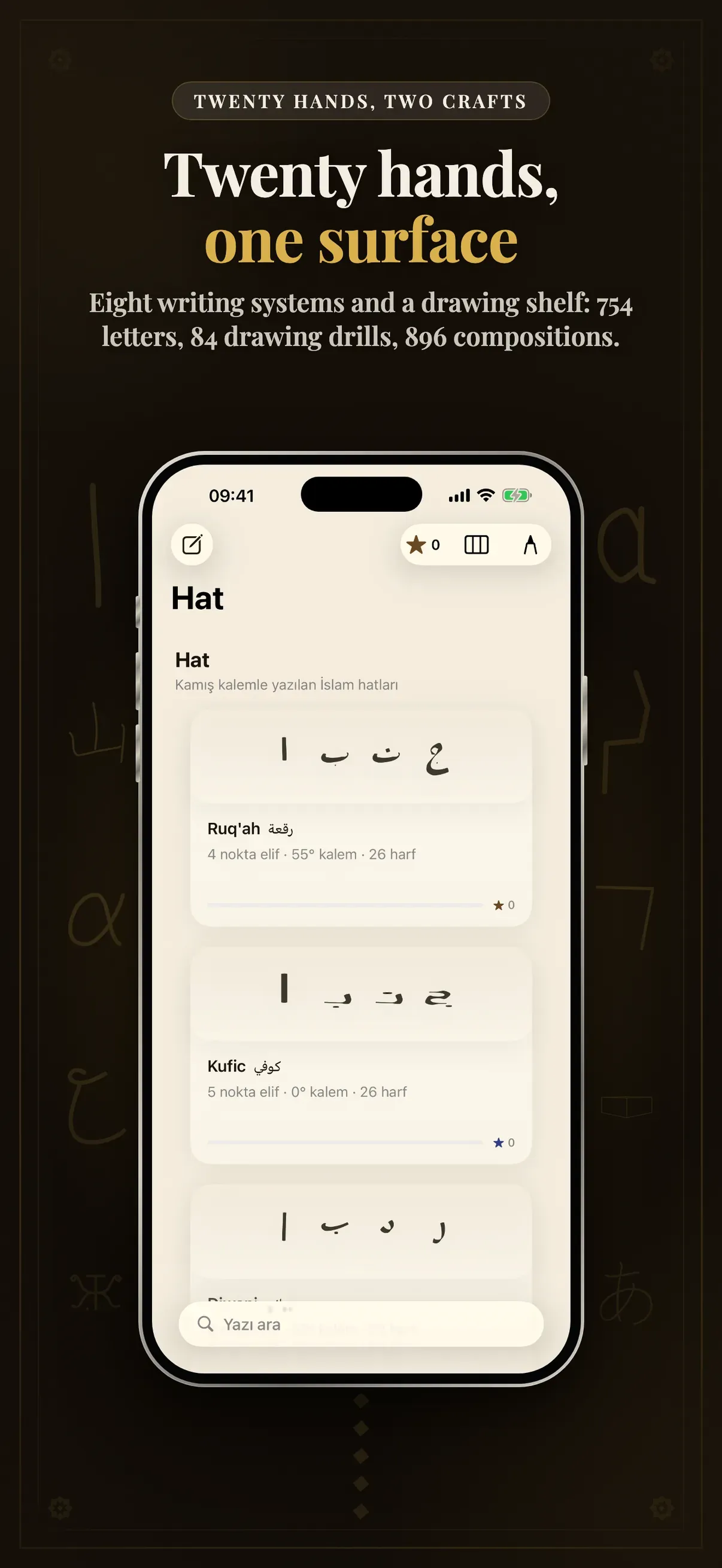
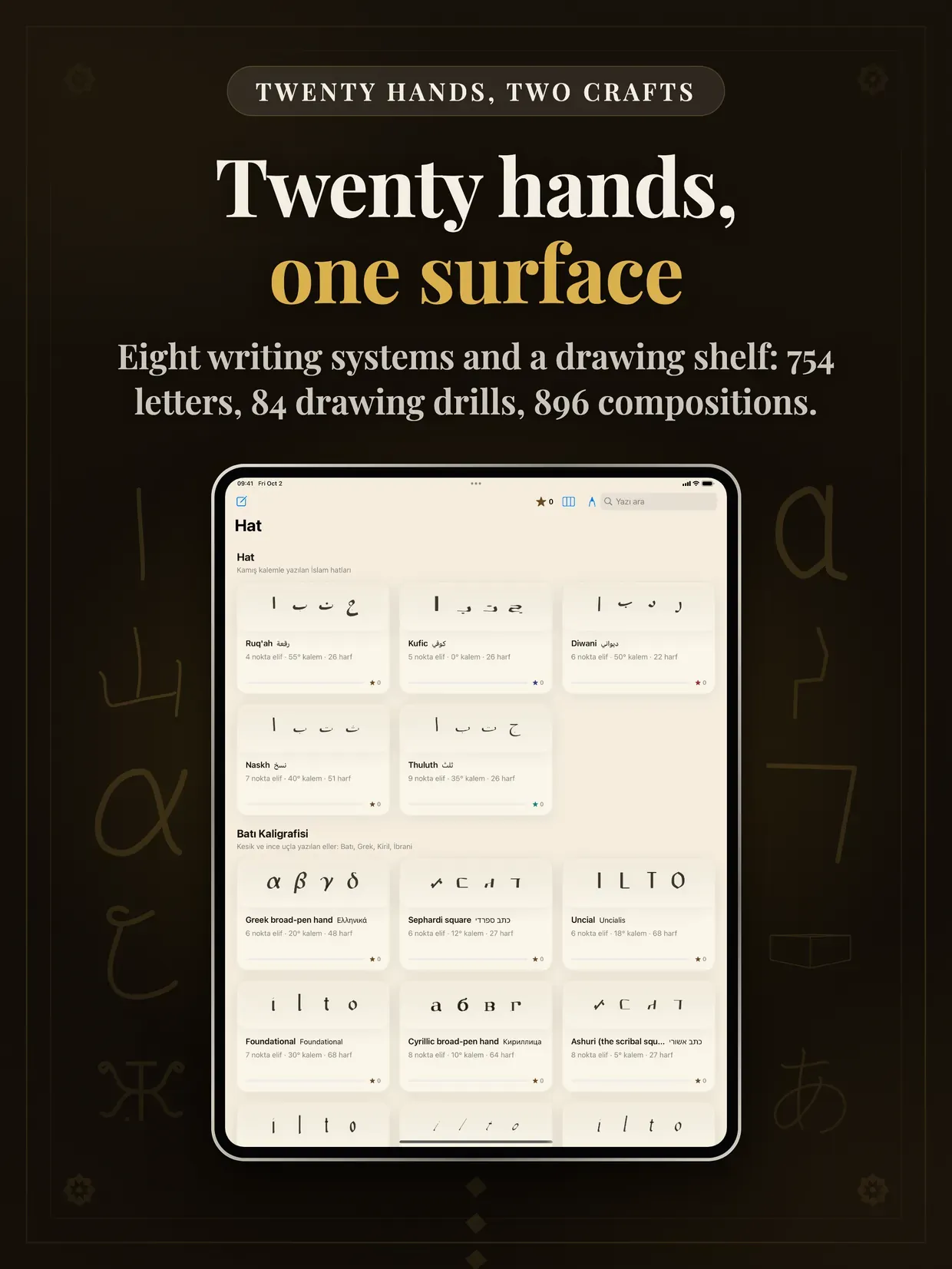
- 20 hands across 8 writing systems — 754 letters and 84 drawing exercises
- 896 compositions in writing order — 19,888 strokes
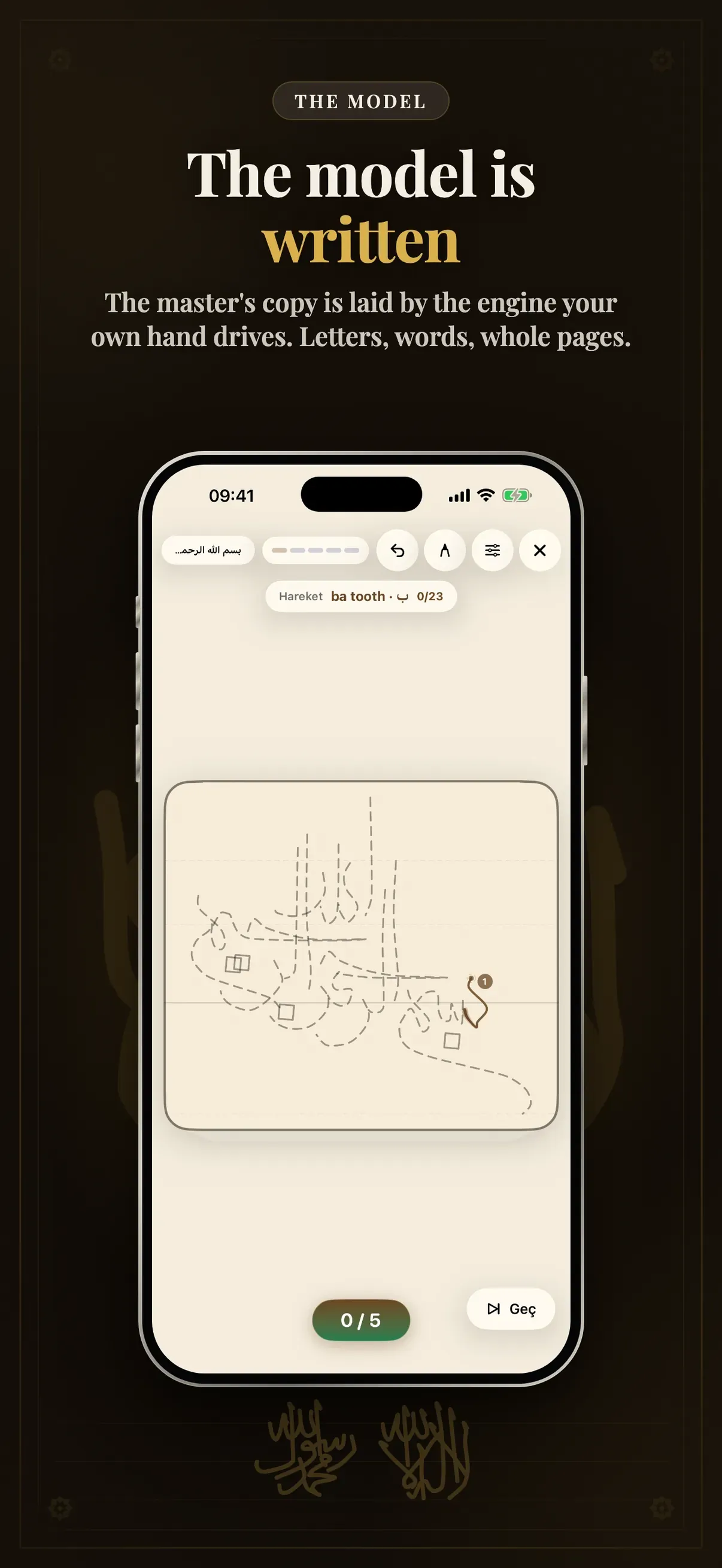
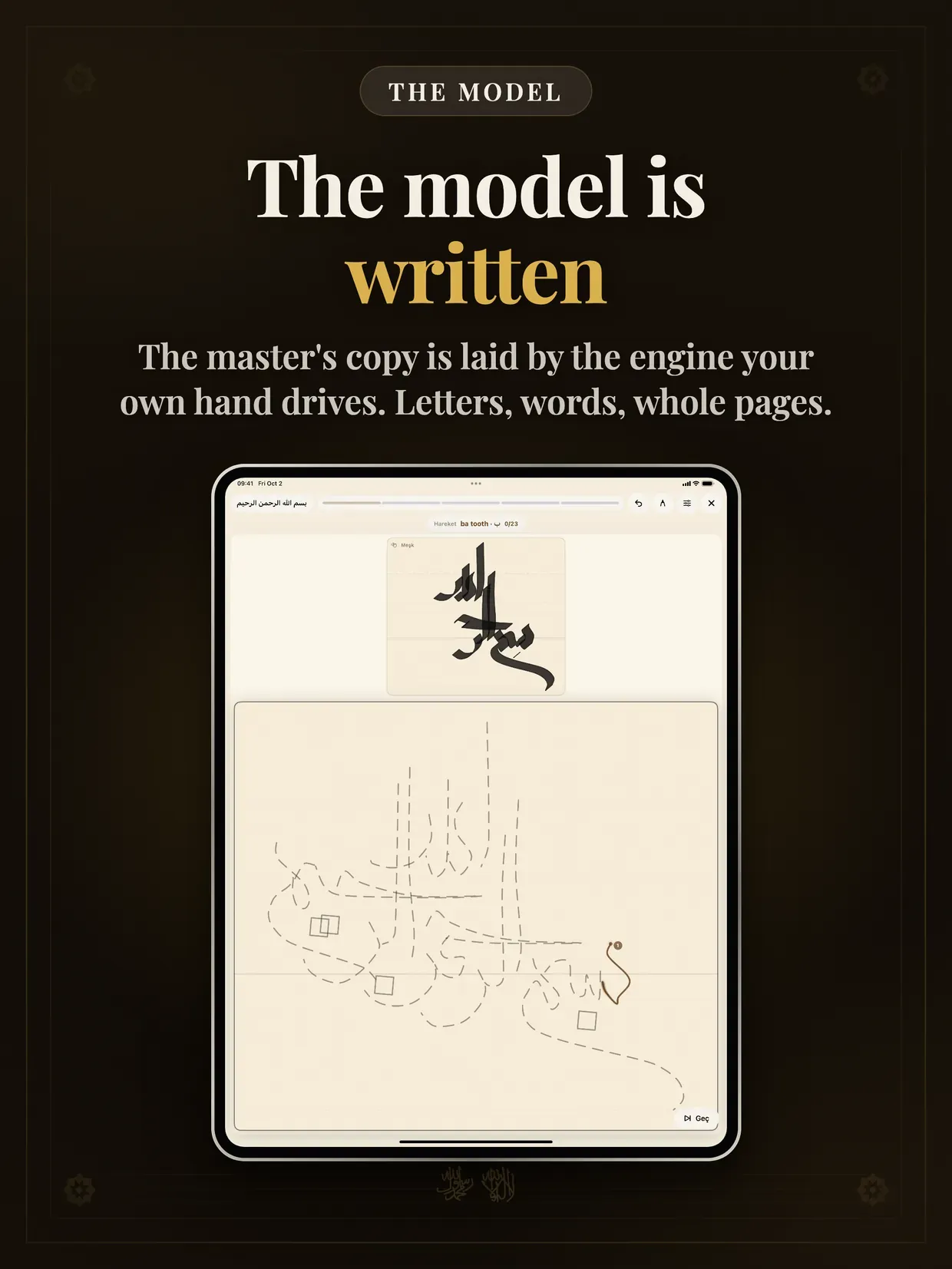
- The model letter is written by the same ink engine your hand drives
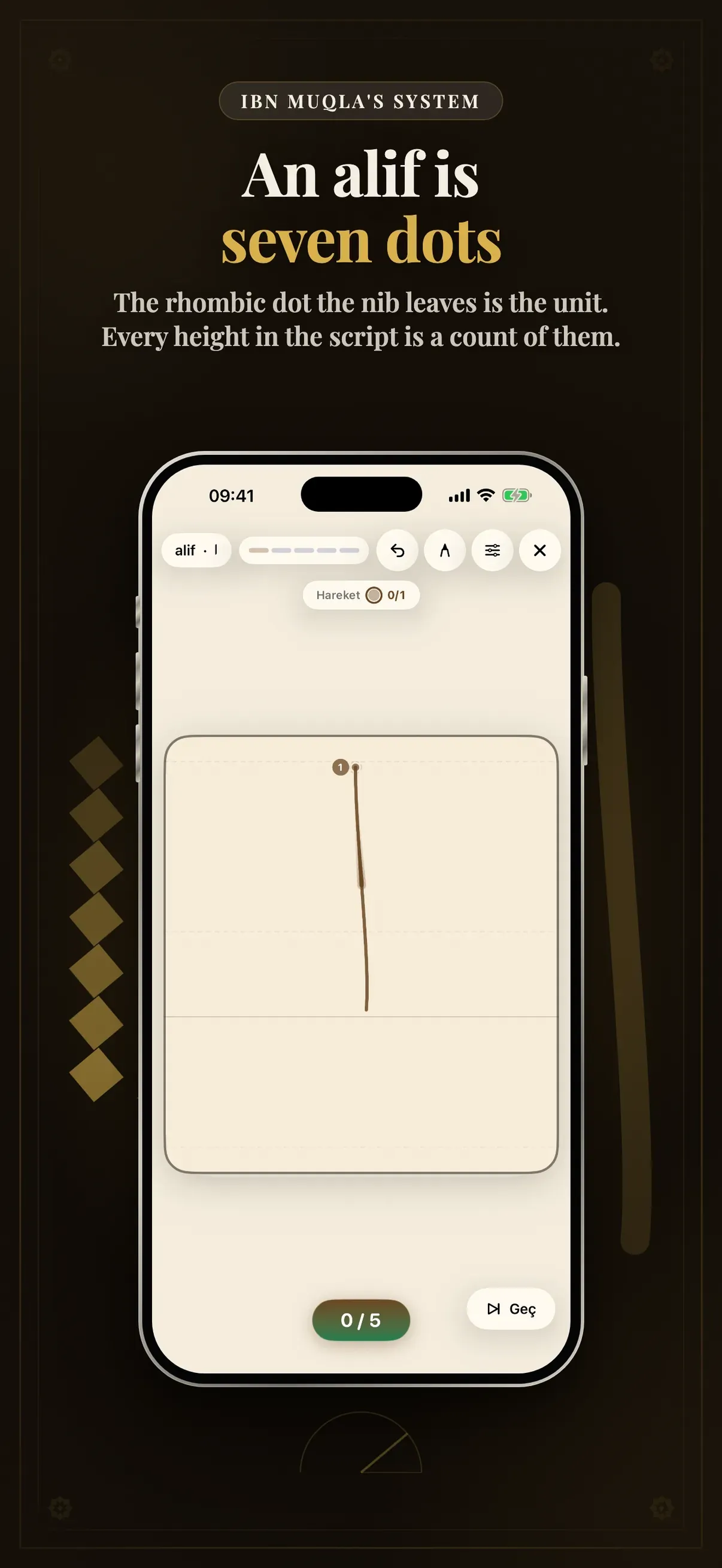
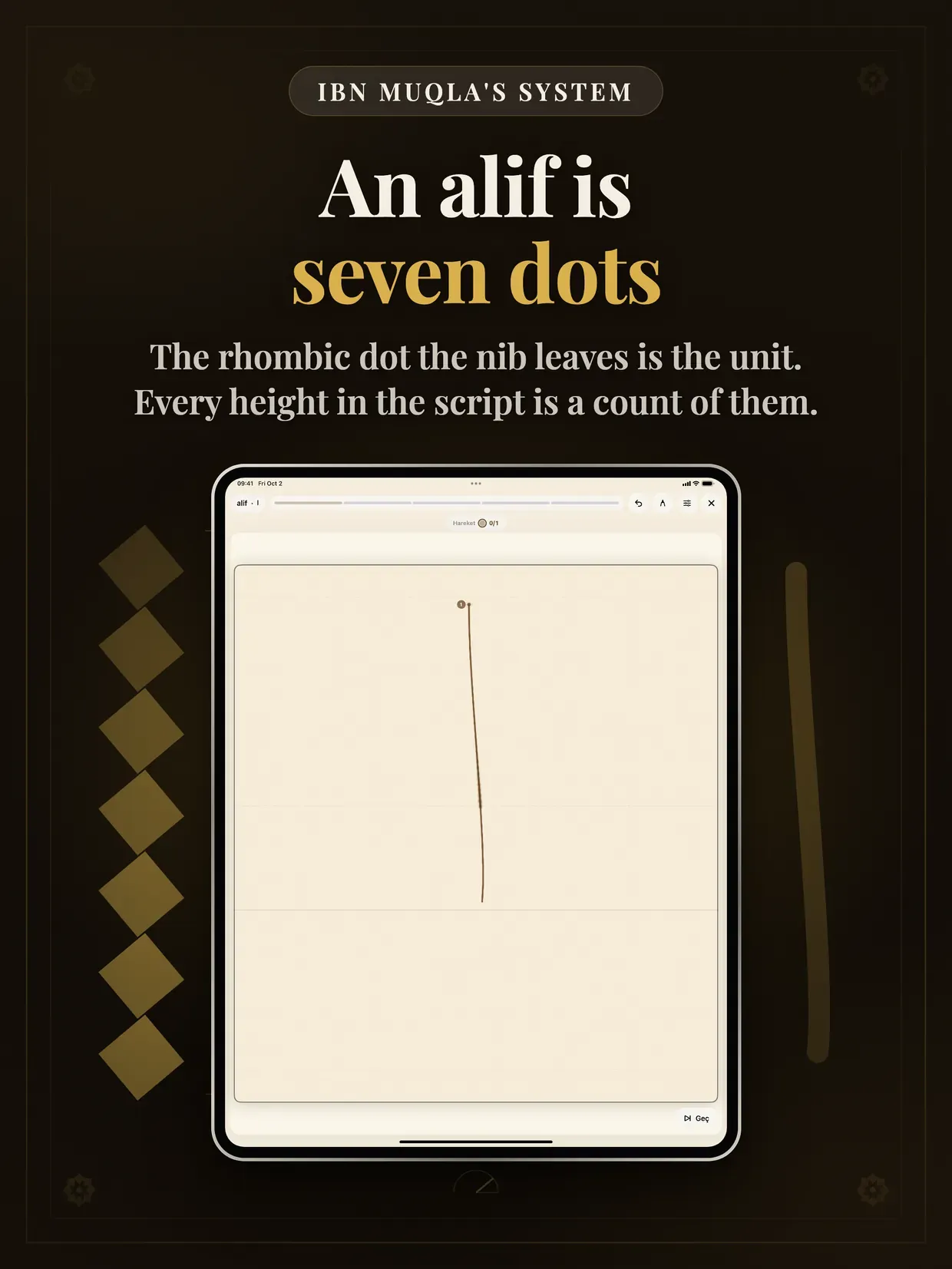
- Every proportion and tolerance counted in nuqta, the pen's own dot
- One fit for the exemplar, the template, the guide, the ruling and the score
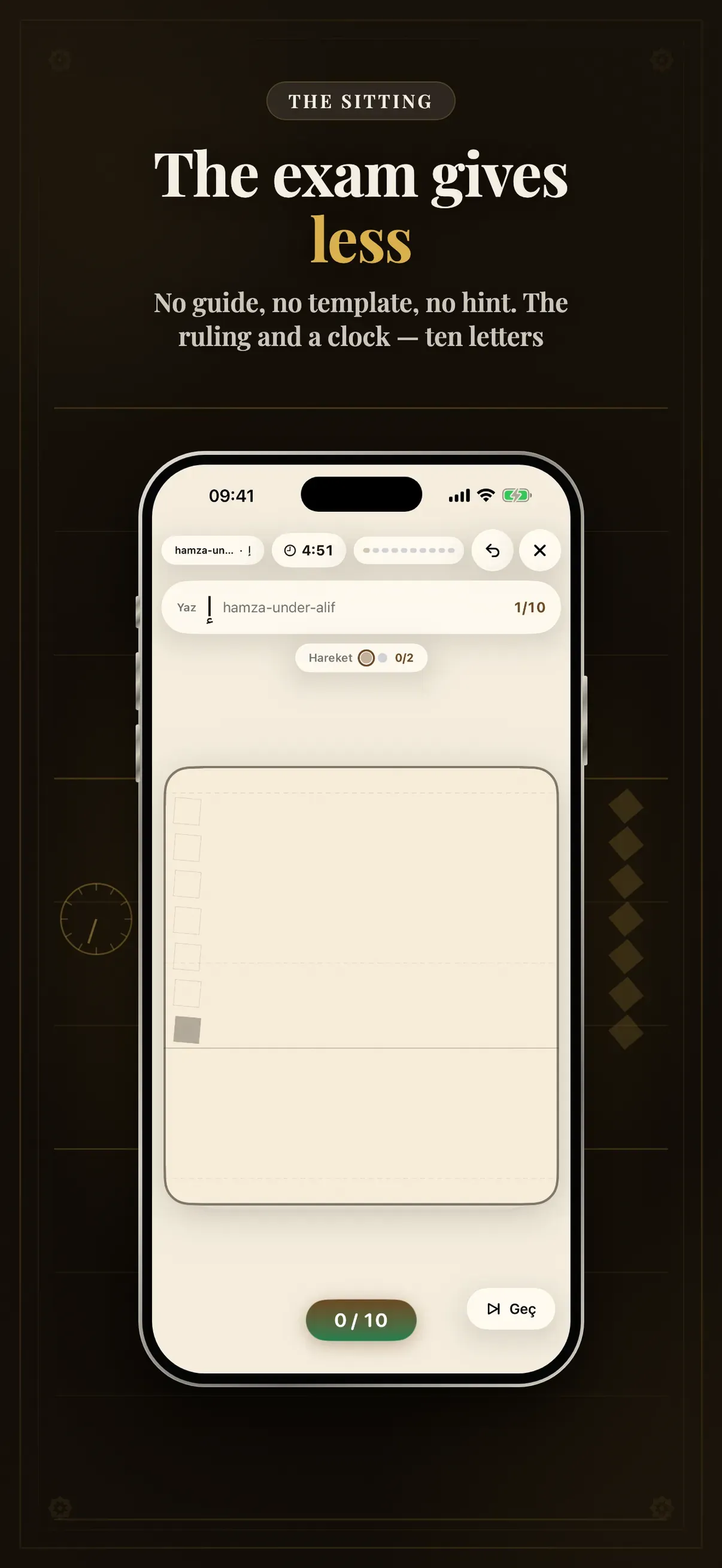
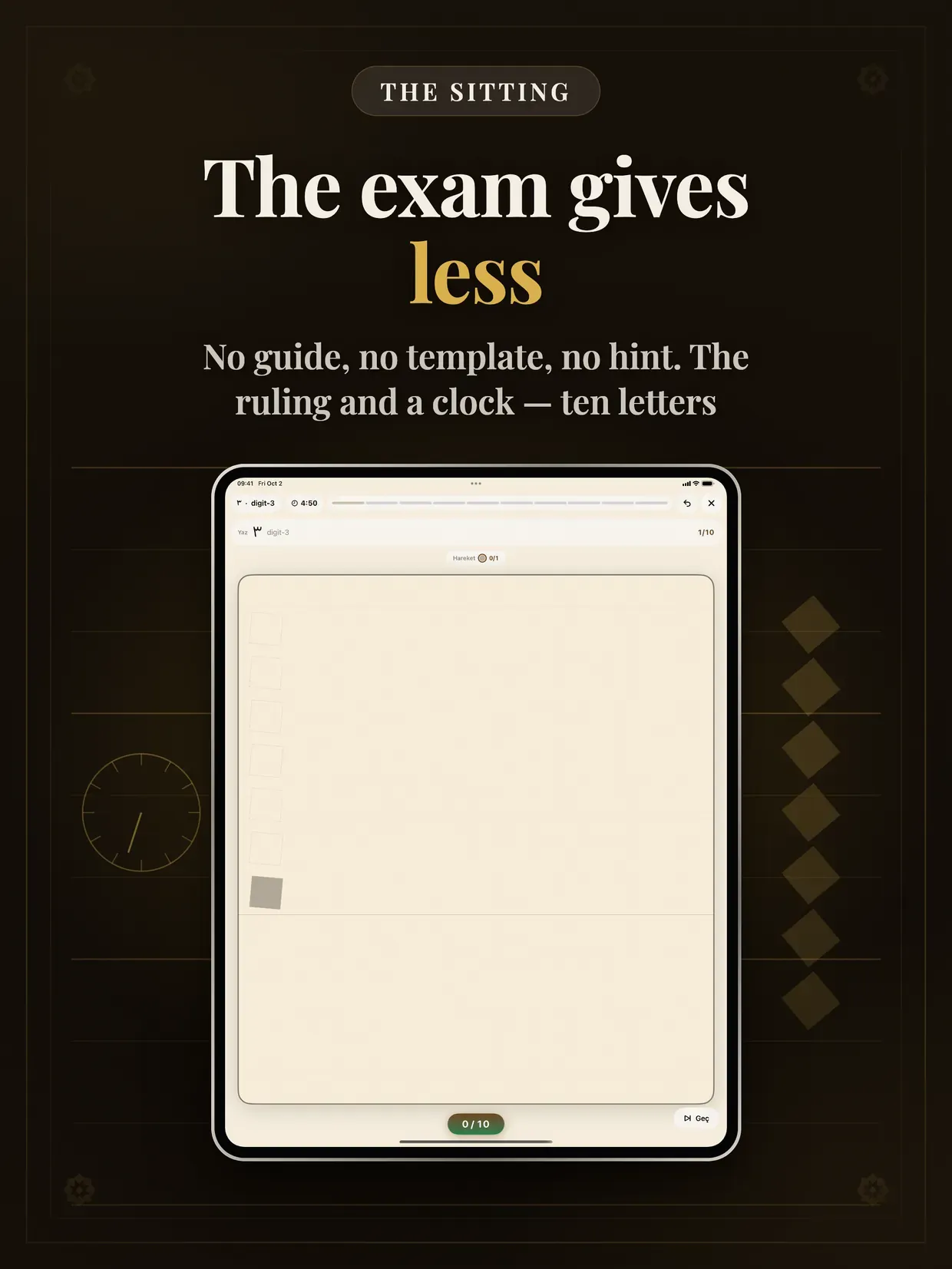
- An exam that keeps the scoring and takes the supports away
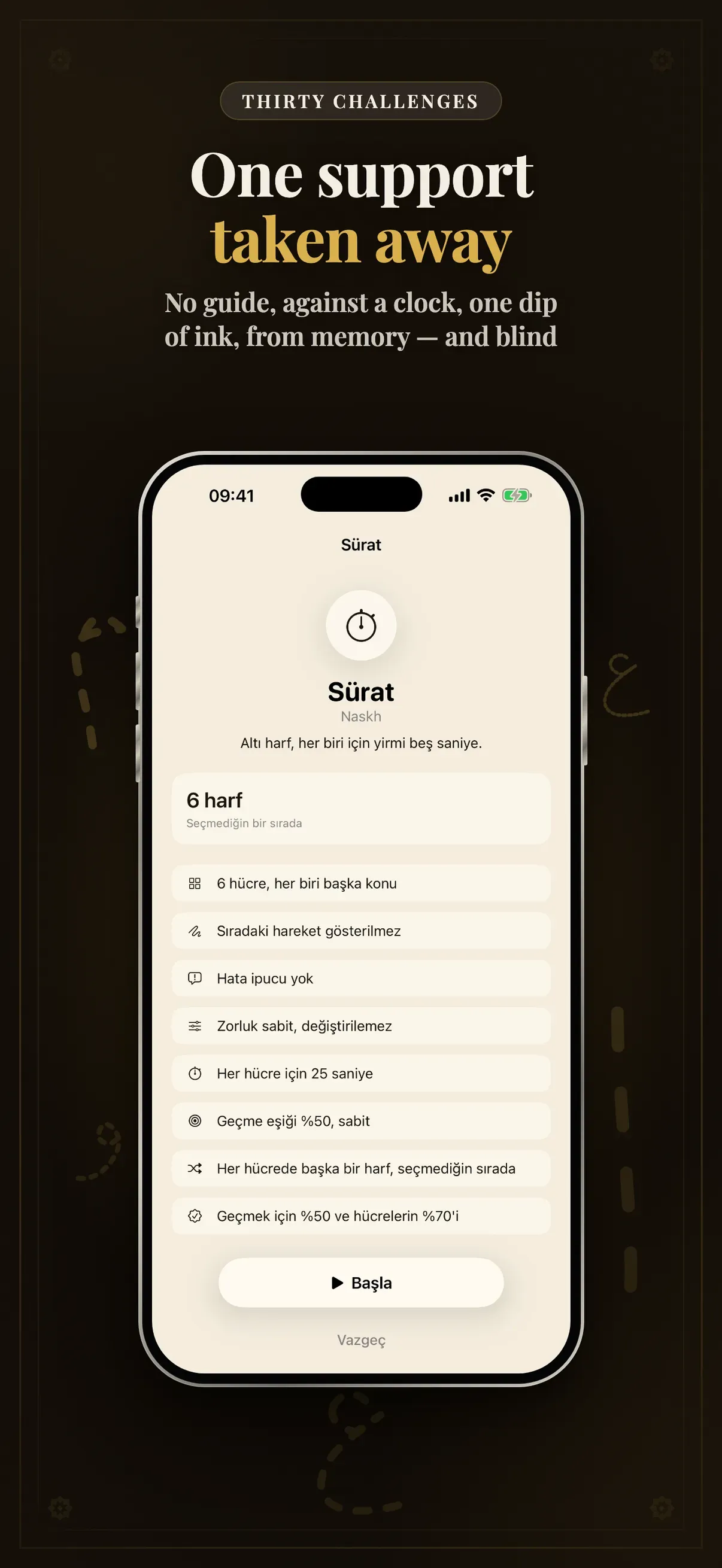
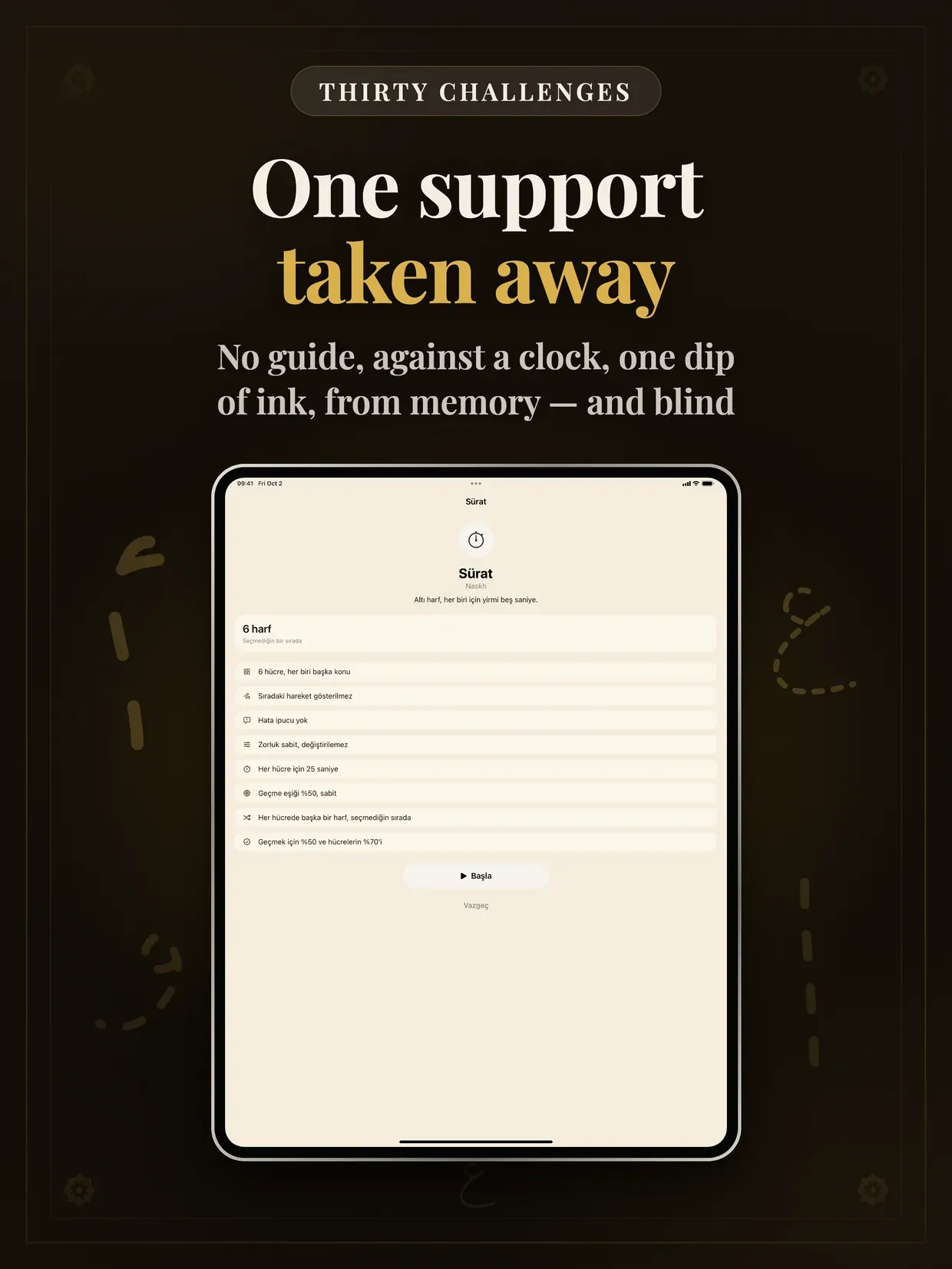
- Thirty challenges: fifteen remove a support, seven ask for an Ottoman form, eight are for drawing
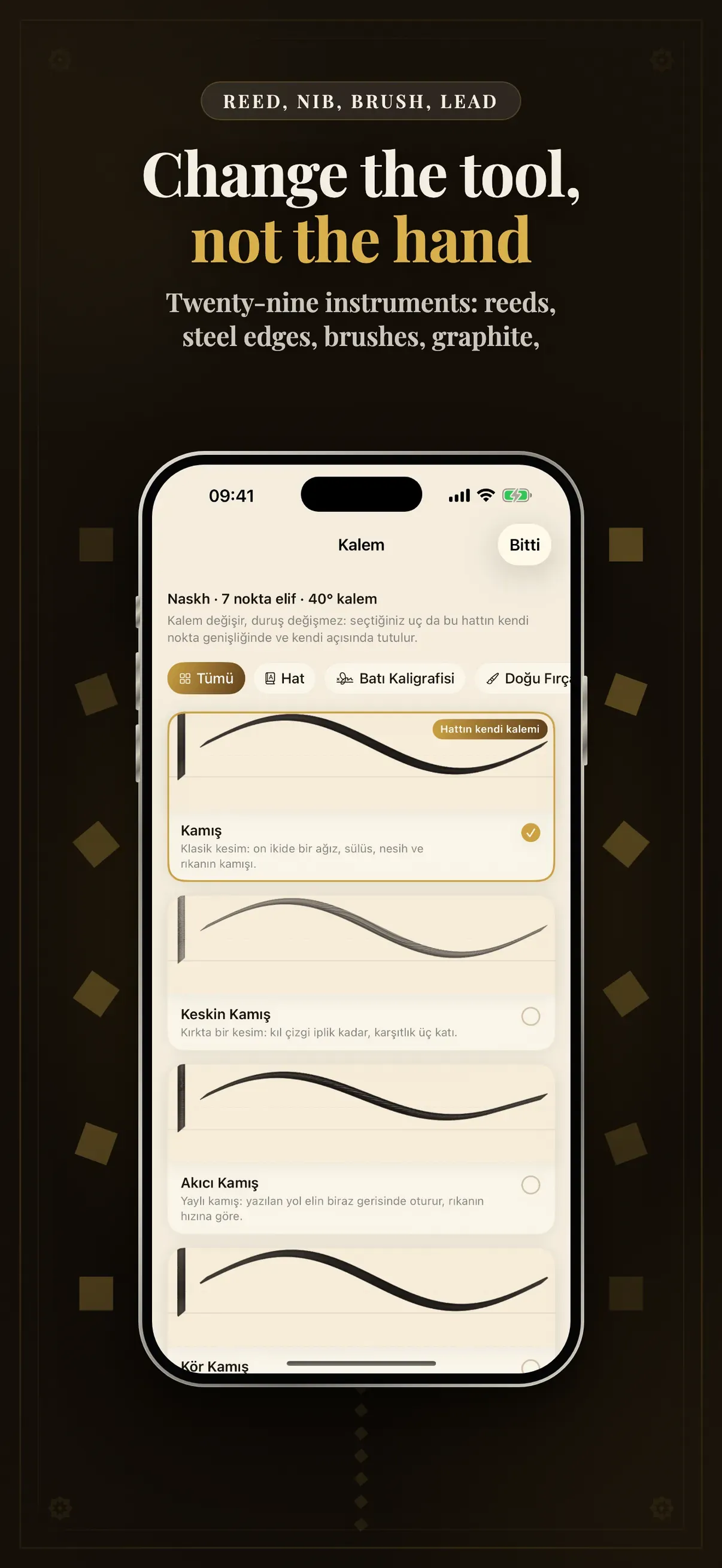
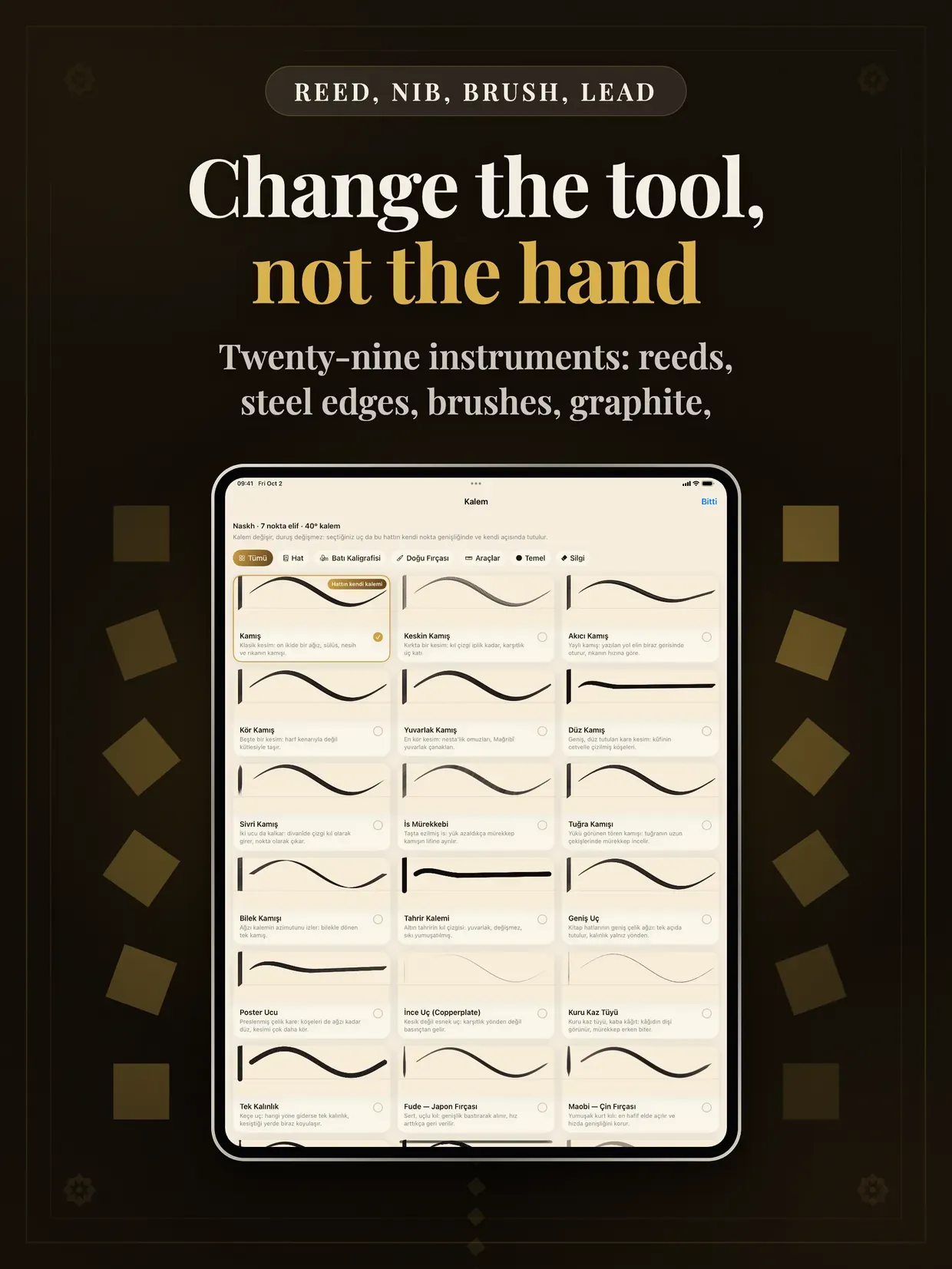
- Twenty-nine instruments on one shelf — reeds, steel nibs, quills, brushes, graphite and charcoal
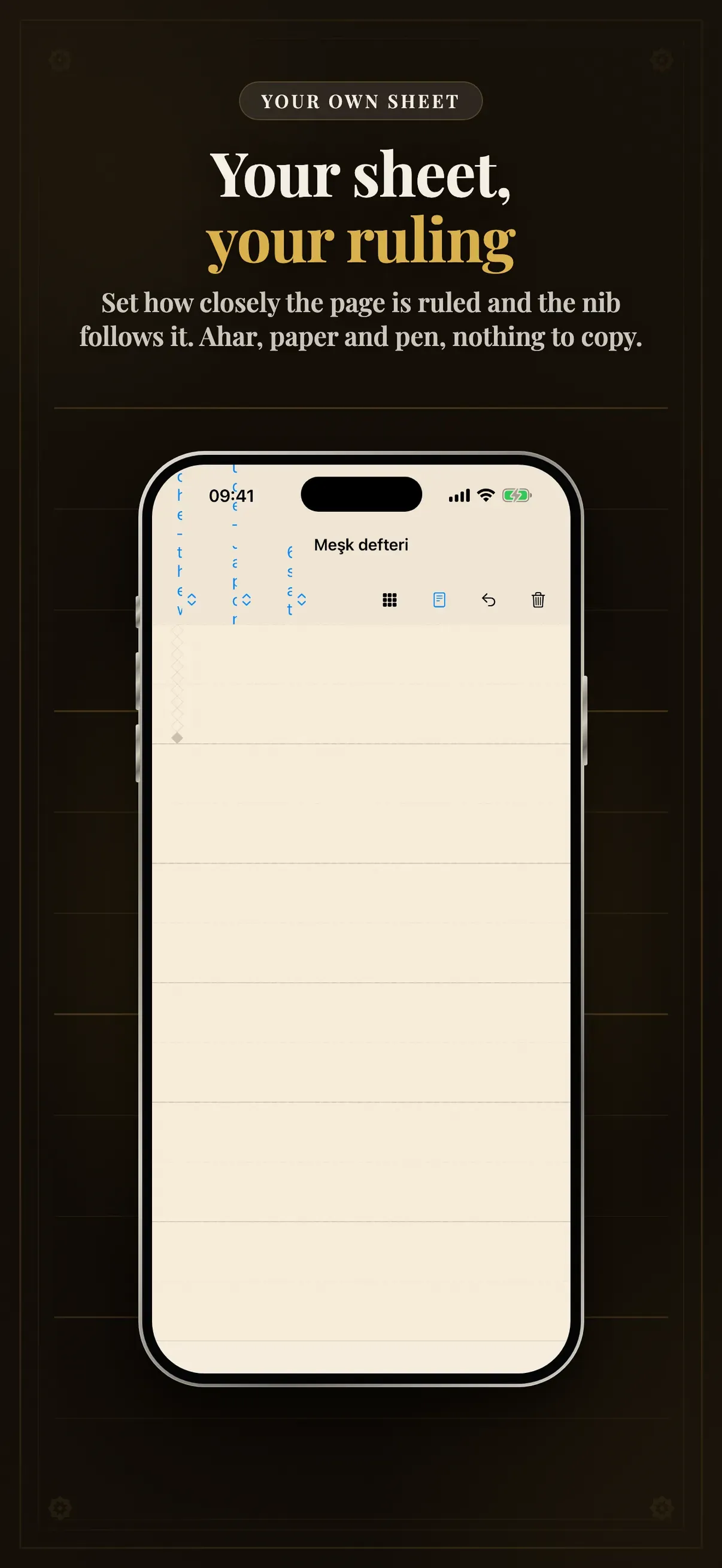
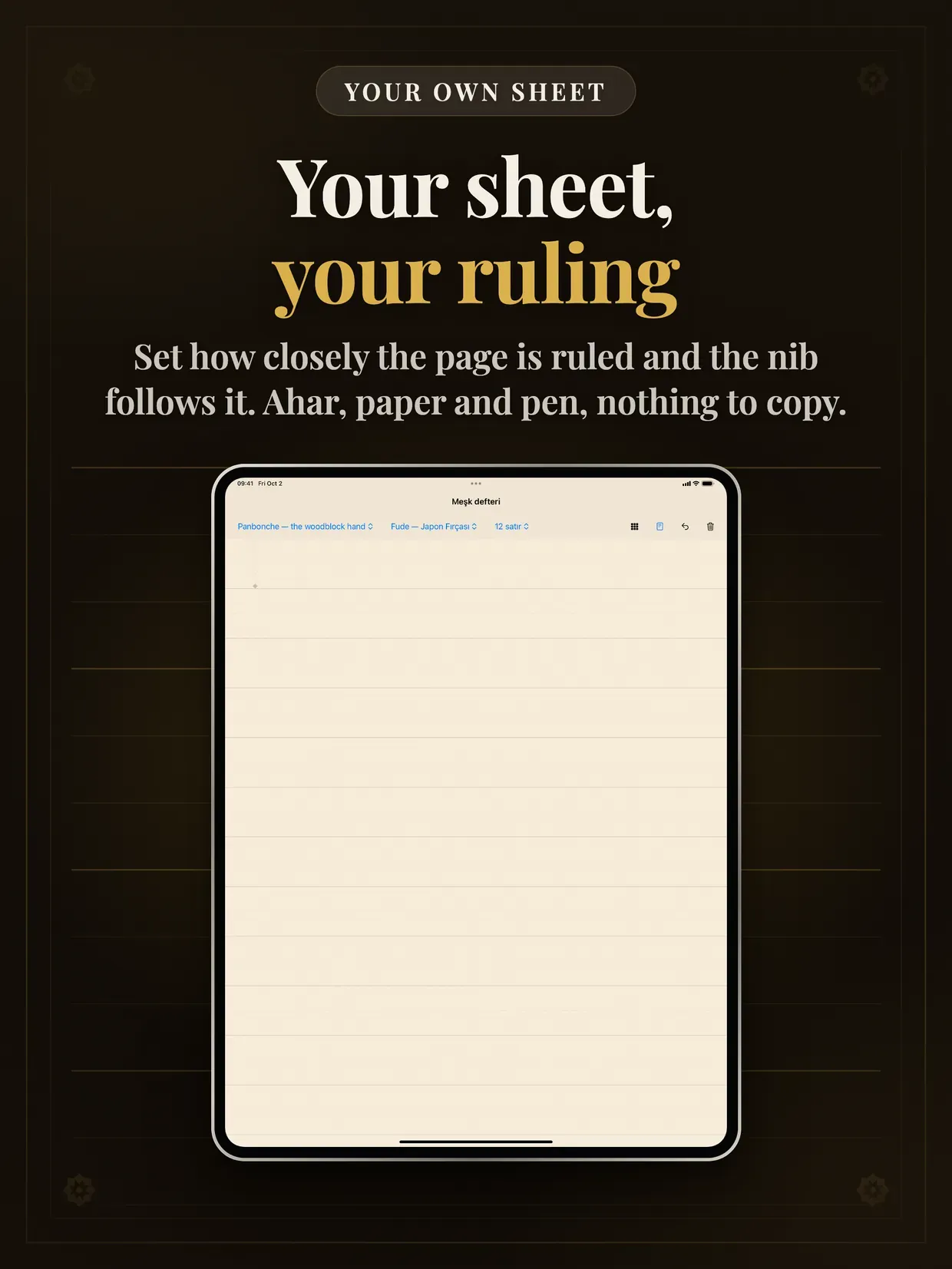
- A practice notebook ruled for any hand, on burnished âhar paper
- Metal paint pipeline for Apple Pencil pressure and tilt, all on device
How it works
-
Pick your level and your hands
Tell Hat whether you are holding the pen for the first time, have done some meşk or have studied with a hoca; that sets the mark a cell is accepted at. Then choose the hands you want, and they move to the front of the shelf.
-
Watch the exemplar being written
Each lesson opens with the master's copy written stroke by stroke, in writing order, by the same ink engine your pen drives. The ruling and a stack of nuqta beside it show how tall the letter is in the hand's own dots, and the pen is cut at the hand's angle.
-
Write it cell by cell
Write each cell with Apple Pencil or a finger, over a dashed template with the next movement animated. Shape and direction make the mark; a stroke in the wrong place or at the wrong size is not accepted, and a hint says whether the shape, the size or the direction missed.
-
Go on to meşk, the exam and challenges
Past the letters come joined words, composed lines, full pages, mirrored müsennâ and the six parts of a tuğra. The exam takes the copy and the template away, adds a clock and asks for letters in an order you did not choose, and 30 challenges each take a support away or ask for a set form.
Who it is for
-
Beginners in Islamic calligraphy
Naskh carries the full Ottoman alphabet of 51 letters, and every hand opens its first five letters for free, so you can try thuluth or diwani before you decide.
-
Students who already have a teacher
Daily meşk between lessons, with proportion checked in nuqta and a strict level that forgives no error of proportion.
-
People learning to draw
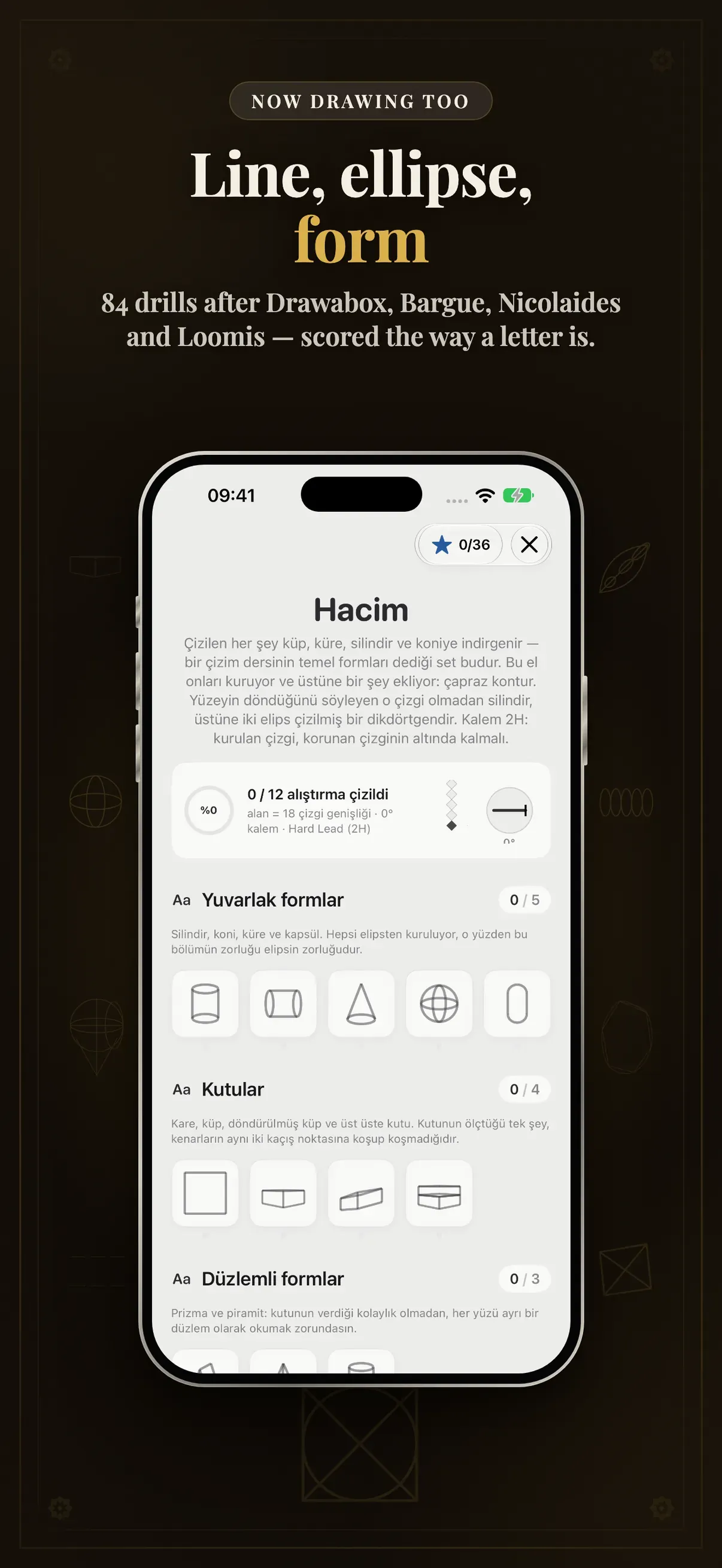
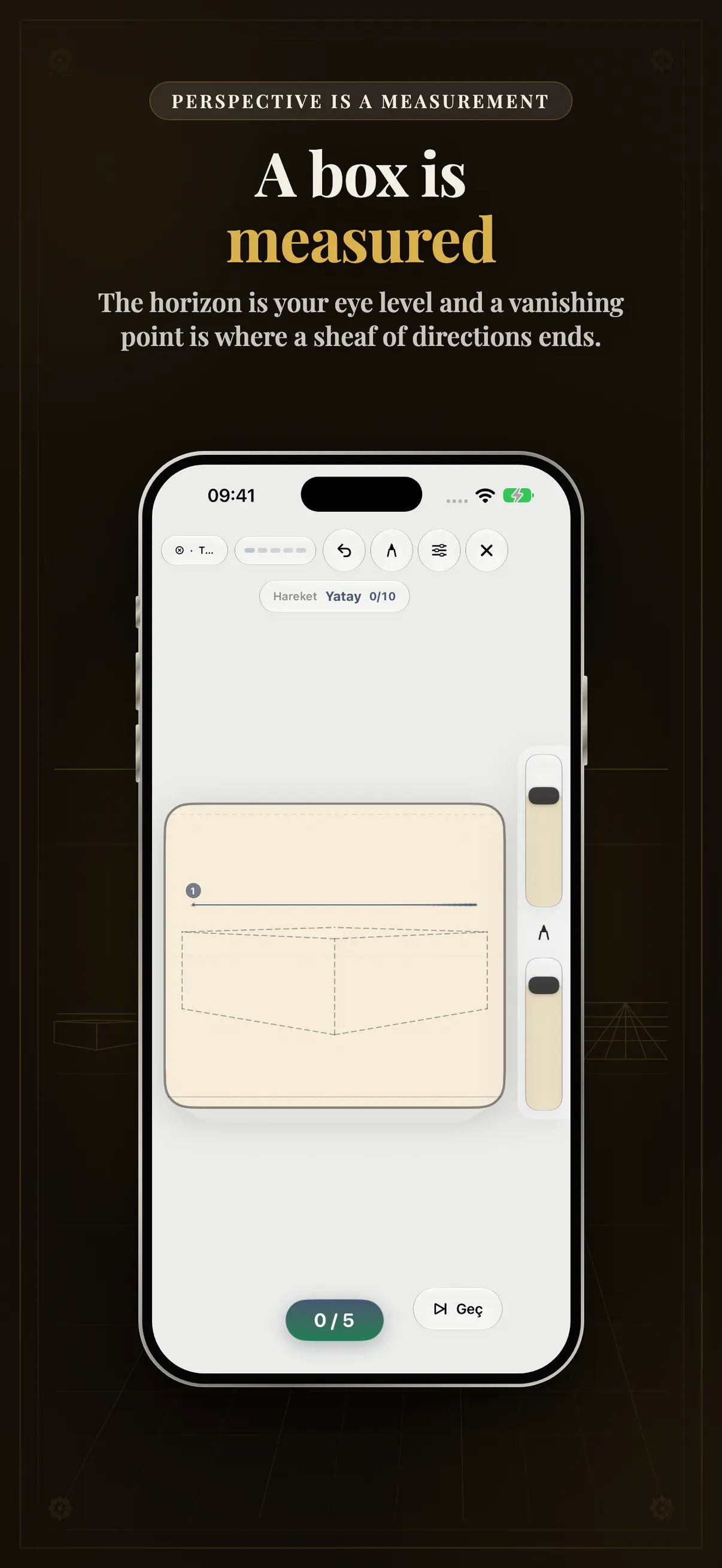
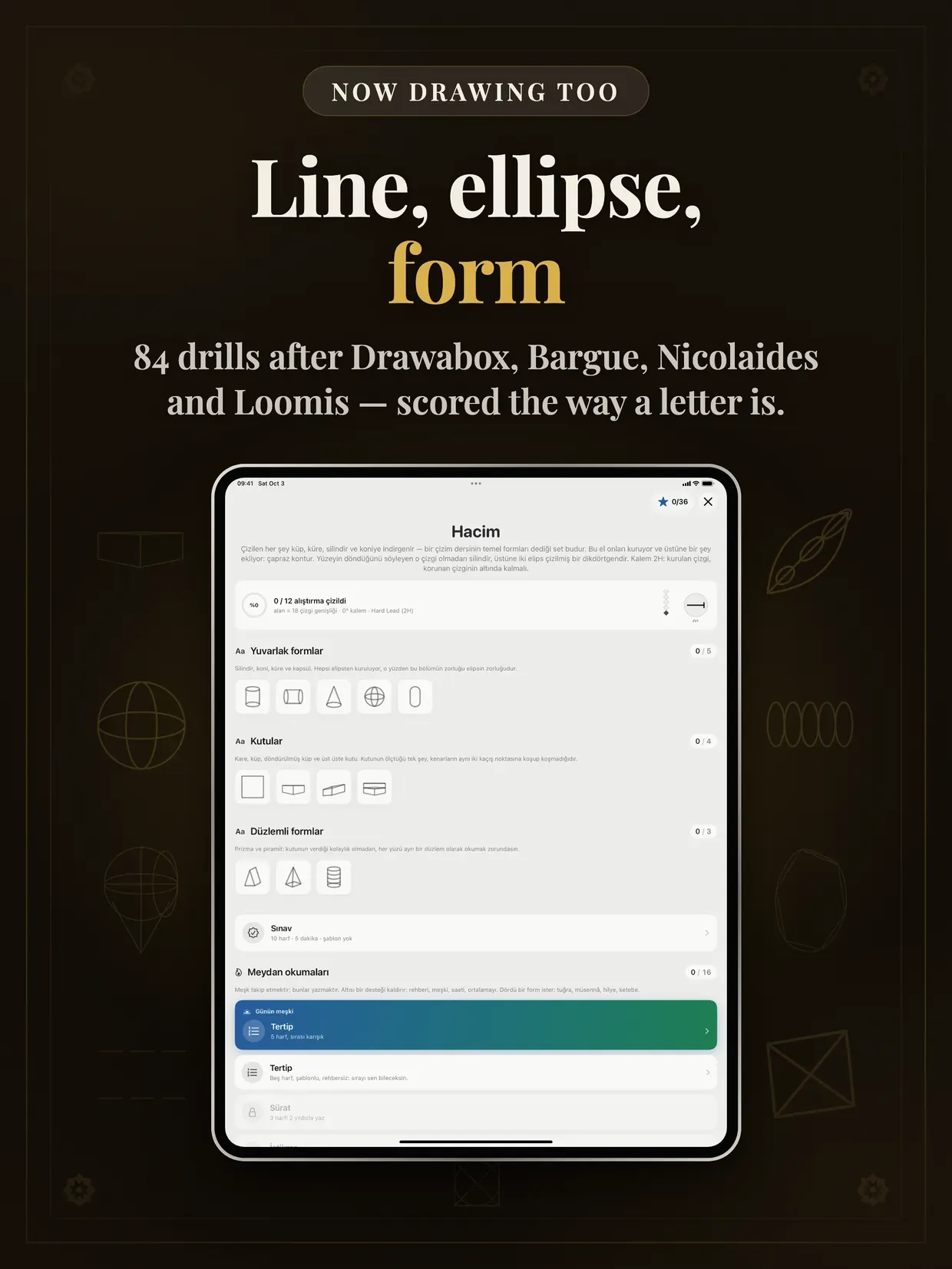
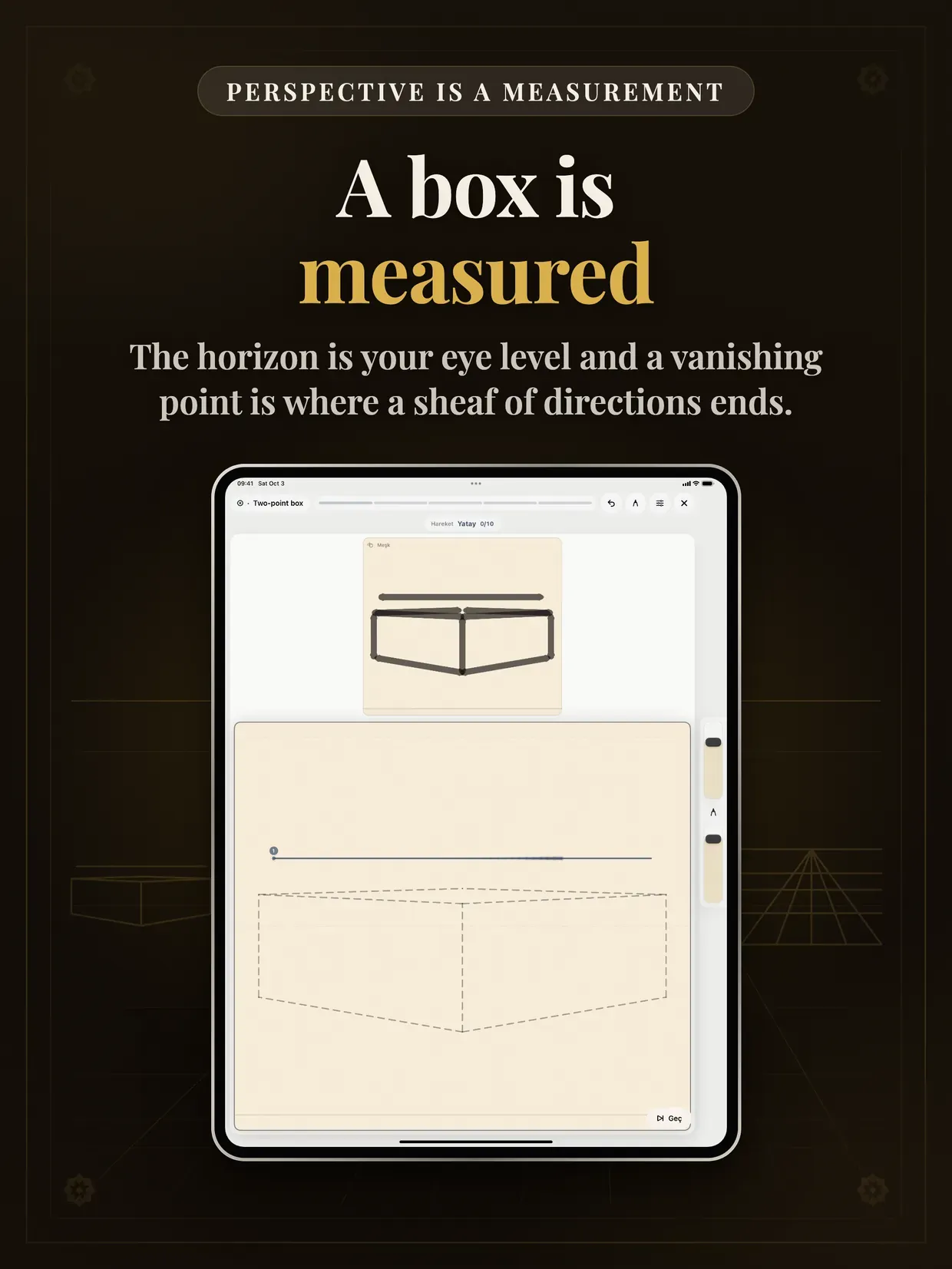
Seven drawing hands with 84 drills in line, ellipse, form, perspective, value, contour and construction, scored the same way a letter is.
-
Calligraphers of other scripts
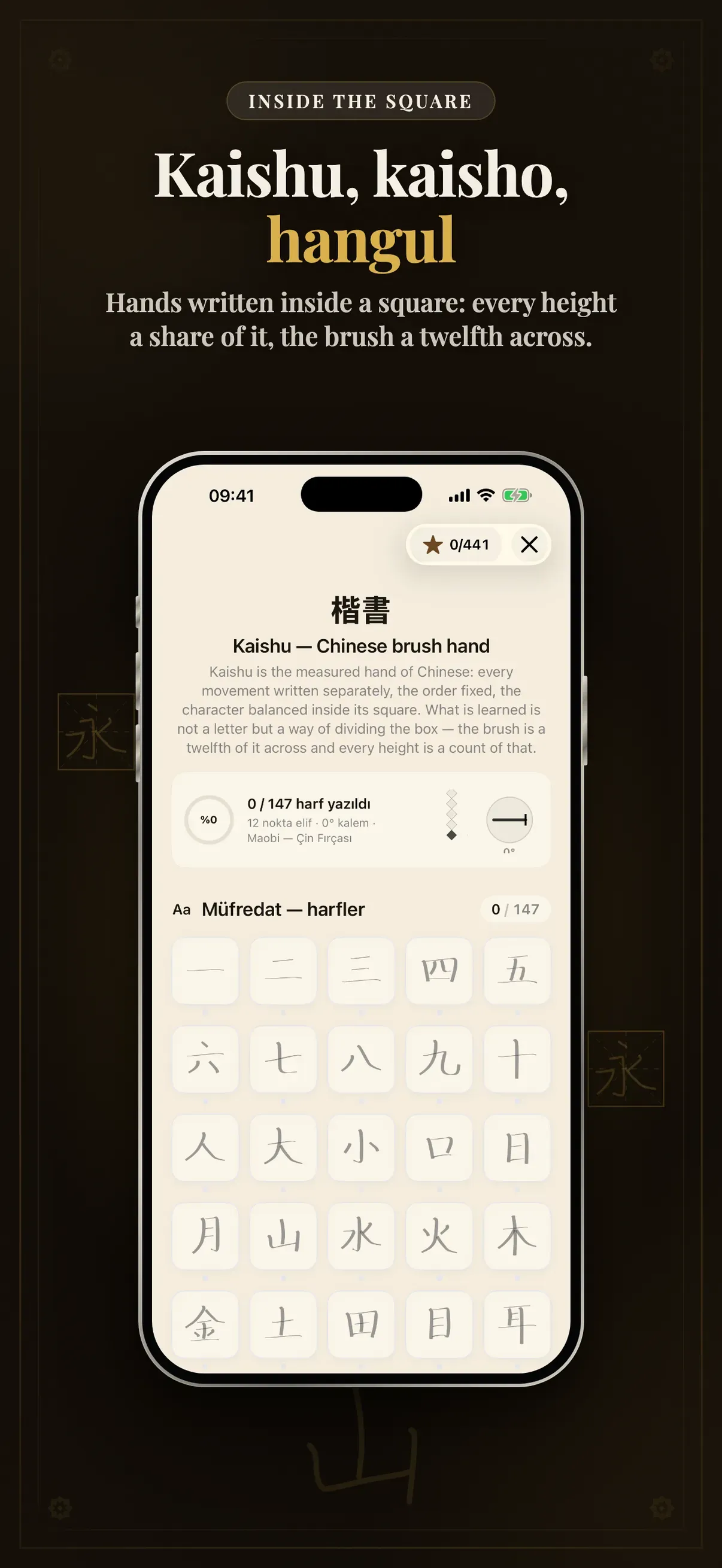
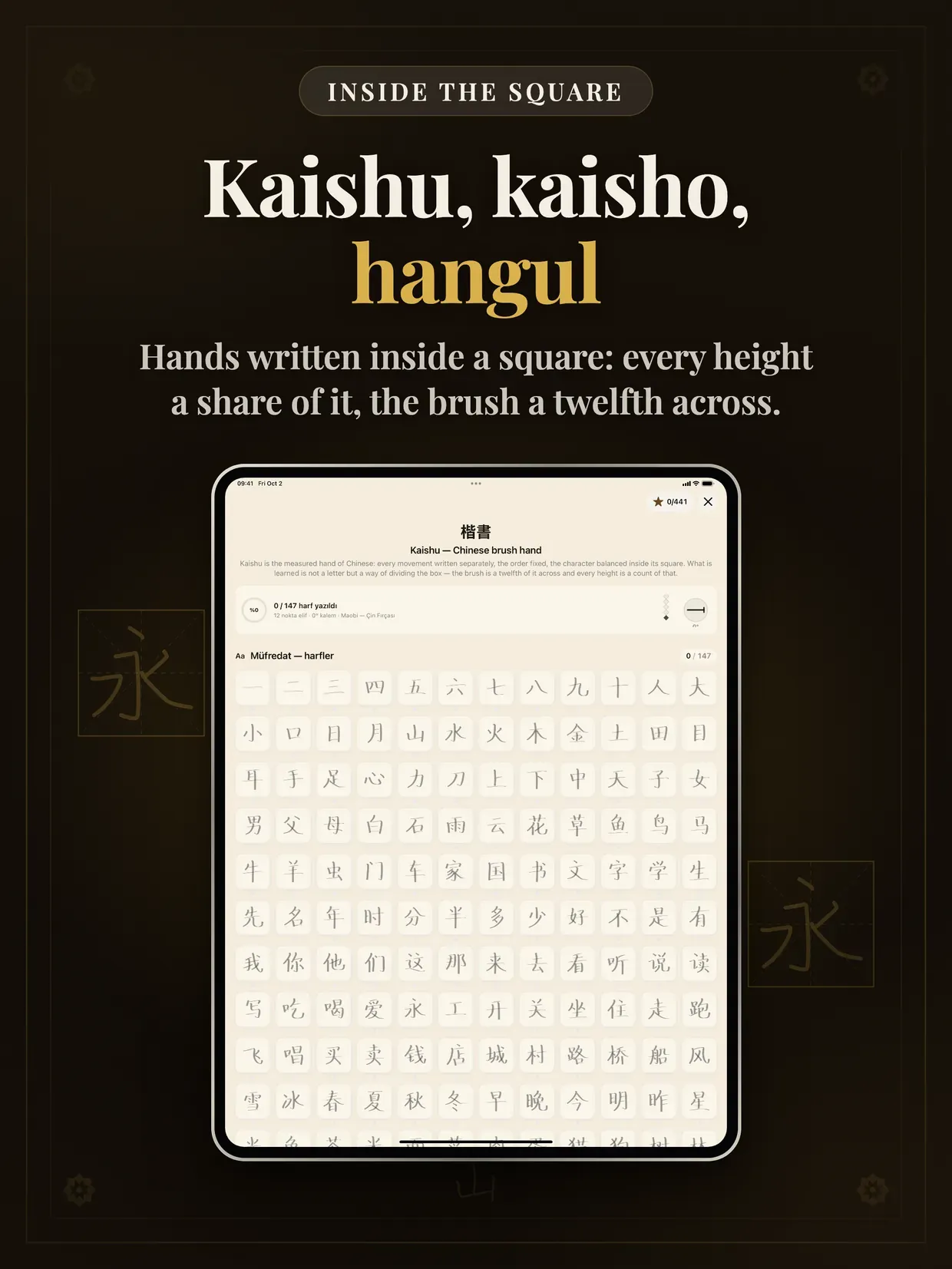
Latin foundational and uncial, Greek, Cyrillic, Hebrew ashuri, Chinese kaishu, Japanese kaisho and Korean panbonche, each with its own pen, angle and ruling.
Written guide
Hat: learning Islamic calligraphy on iPad, one nuqta at a time
Hat teaches thirteen pen hands on iPhone and iPad with Apple Pencil. The exemplar is written by a simulated reed, and every stroke is scored in nuqta.
Read the guideQuestions about Hat: Calligraphy & Drawing
- How do I start learning Arabic calligraphy at home?
- Hat starts every hand at the opening of its own teaching order. You watch the exemplar written stroke by stroke, then write the same letter in a row of cells over a template. Heights are counted in nuqta, the dot the reed leaves when pressed once, so you always know how tall a letter should be. A daily reminder at an hour you pick keeps the repetition going.
- Which calligraphy styles can I practise?
- Arabic naskh, thuluth, kufic, ruqah and diwani, plus Latin foundational and uncial, Greek, Cyrillic, Hebrew ashuri, Chinese kaishu, Japanese kaisho and Korean panbonche. Naskh has its full Ottoman alphabet of 51 letters, including پ چ ژ گ ڭ. The other Arabic hands are partial (kufic 19 letters, ruqah 16, diwani 10, thuluth 6), and each pack says in the app how finished it is.
- Can I practise drawing as well?
- Yes. Seven drawing hands hold 84 drills: lines, ellipses, form, one-, two- and three-point perspective, value, contour and construction. Each drill is an ordered run of strokes, scored the way a letter is, and the pen shelf has graphite, charcoal, a technical liner and a chisel marker for them.
- What is free, and what does full access add?
- Every hand opens for free: in each one, the first five letters or exercises of its teaching order and the first two of every named letter group, with that hand's pen and exemplar. The practice notebook is free too. Full access opens the rest of every alphabet, the compositions, the words, the exam, the 30 challenges and switching pens, as a monthly or yearly plan, each with a one-week free trial, or a one-time lifetime purchase.
- Does Hat work on iPad with Apple Pencil?
- Hat runs on iPhone and iPad. With Apple Pencil, pressure and tilt shape the ink, and one challenge checks whether your pen turned during a stroke. You can also write with a finger. There is no Mac version.
- Do I need an account or an internet connection?
- No account is needed. The hands and compositions are inside the app, so lessons work offline, and your letters, scores and progress stay on your device. When you finish a lesson, you can save the page to Photos.
- Which languages is the app in?
- The interface is in 18 languages: English, Arabic, Chinese (Simplified and Traditional), Dutch, French, German, Hindi, Indonesian, Italian, Japanese, Korean, Malay, Polish, Portuguese (Brazil), Russian, Spanish and Turkish.
Same corner of the toy box
More apps you might like
If Hat: Calligraphy & Drawing is your kind of thing, these live in the same neighbourhood — all made by the same pair of hands.