 Free on the App Store
- Category
- Music
- Runs on
- iPhone, iPad
- Developer
- Cihat SALİK
Preview
iOS

About
Dedicated site: Stretch: Piano Tuner
Highlights
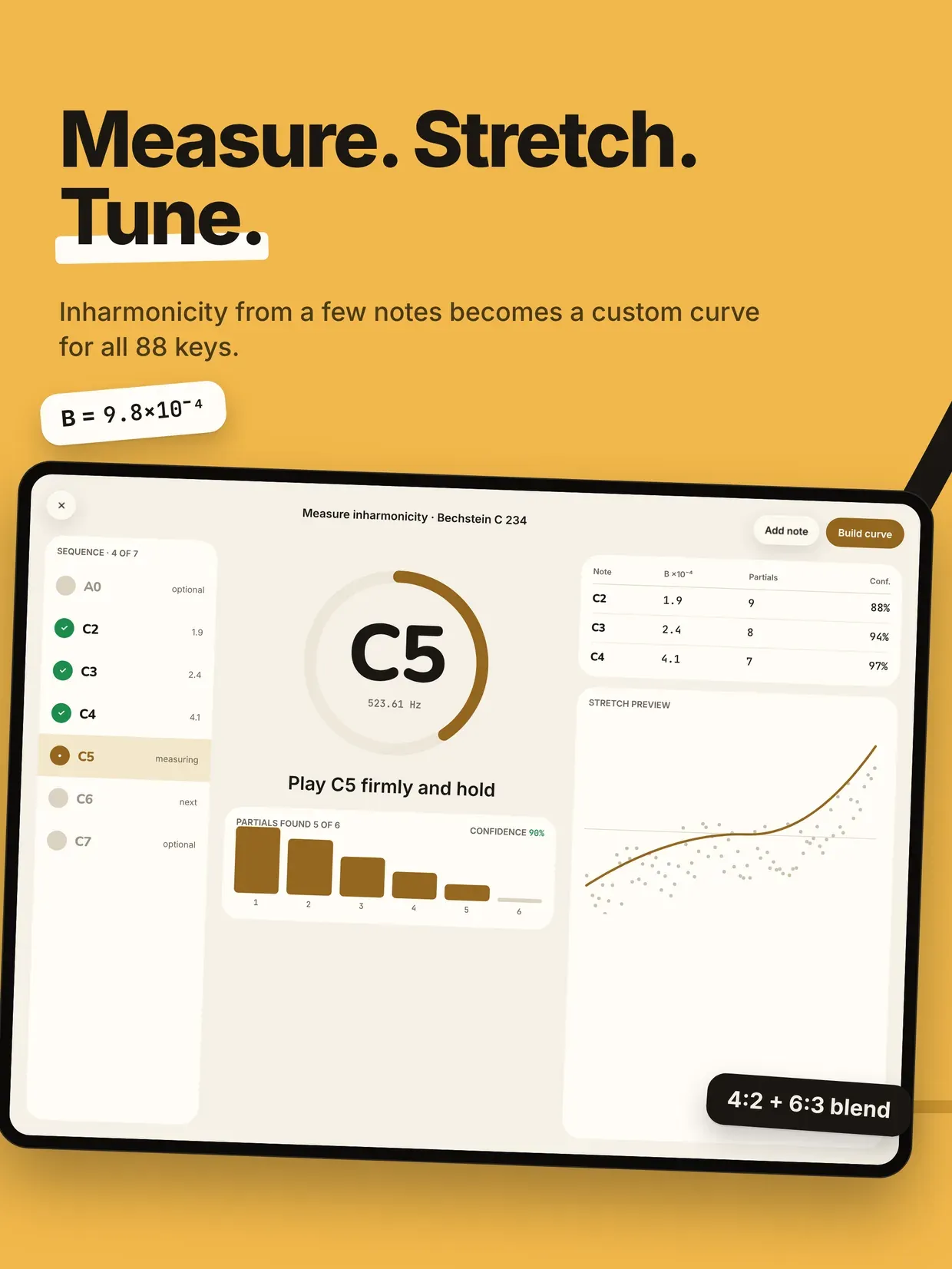
- Measures this piano's inharmonicity from five notes, then tunes all 88 keys to its own curve
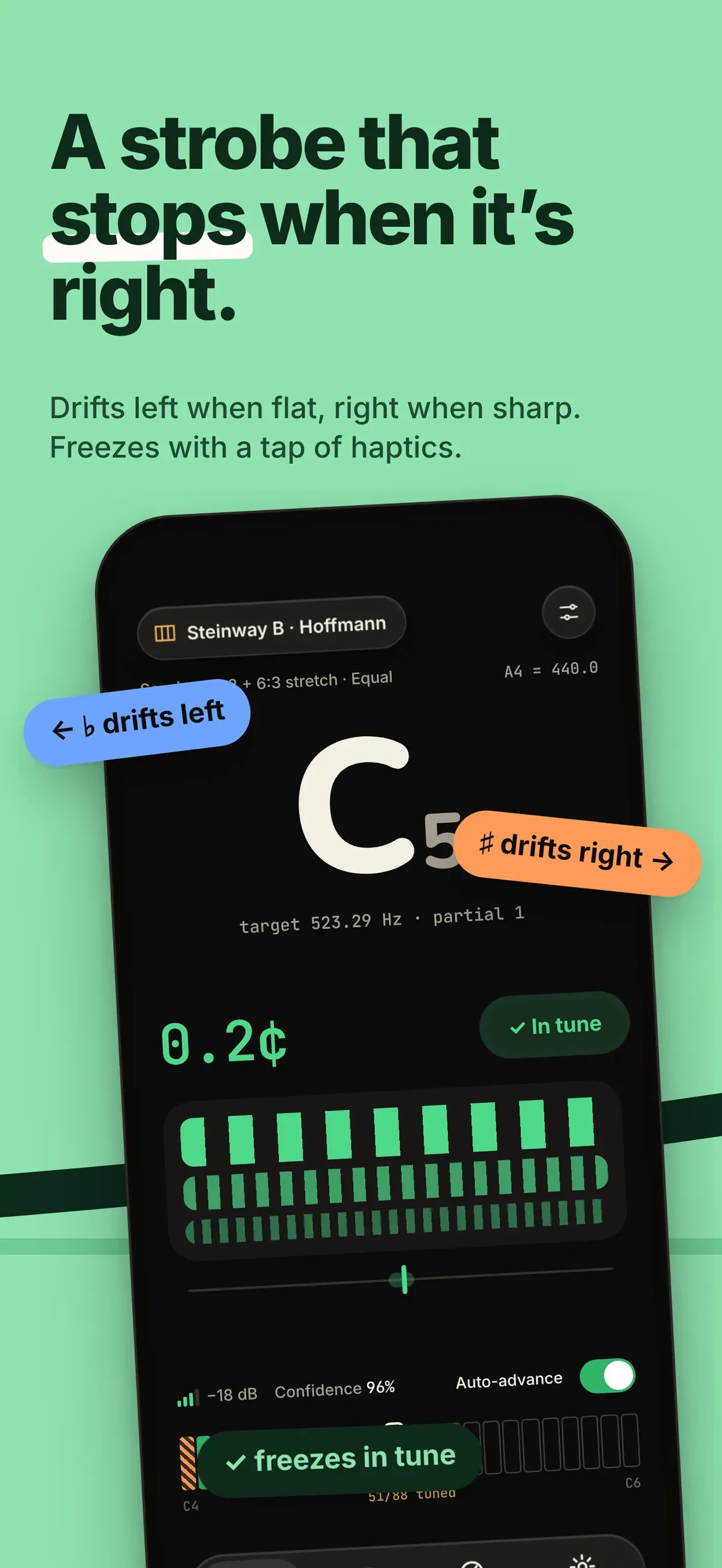
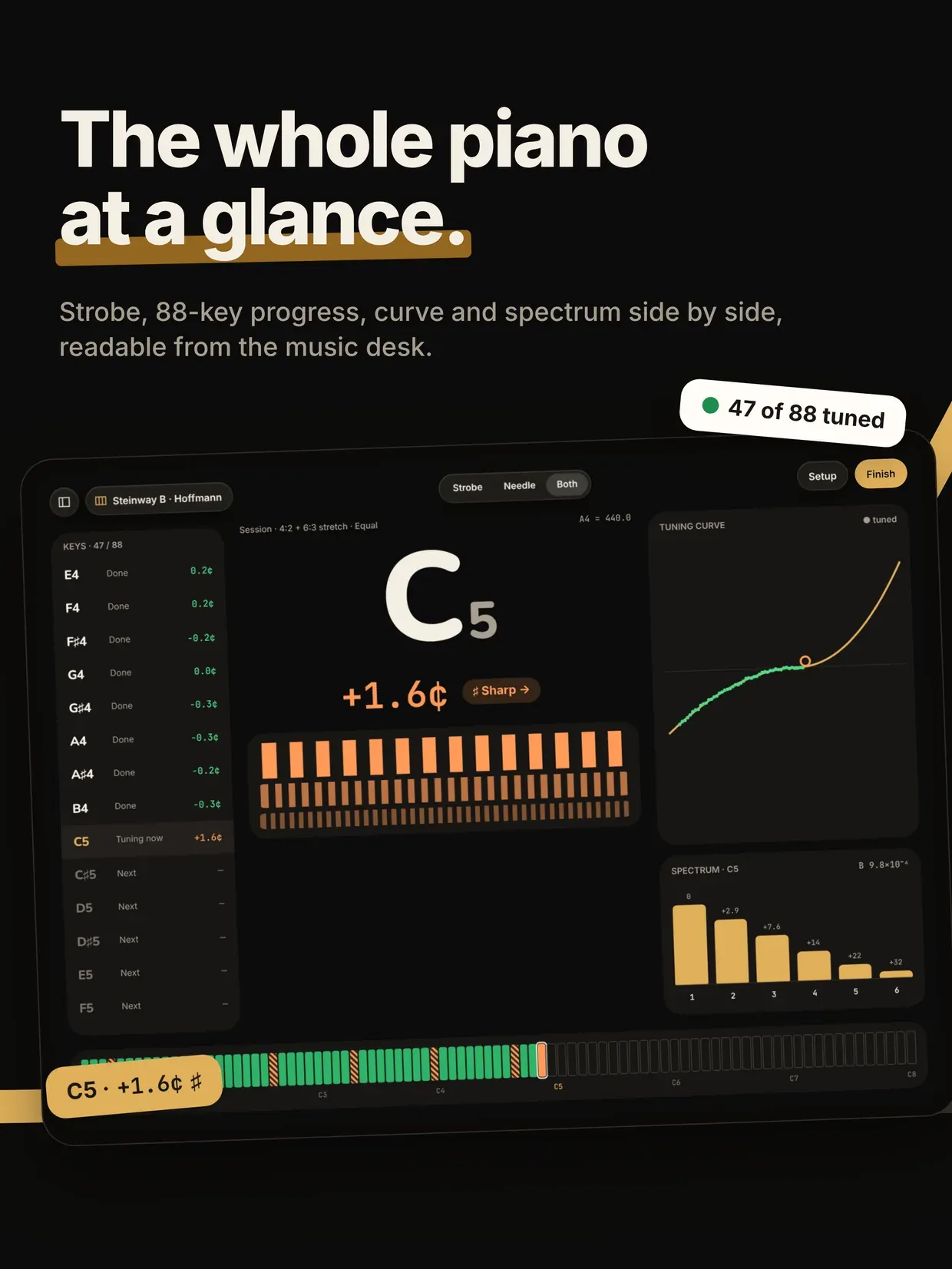
- A strobe display that drifts when the string is flat or sharp and stands still the moment it is right
- Balanced, 2:1, 4:2, 6:3 and concert octaves with separate bass and treble stretch, historical temperaments and a 392–466 Hz reference
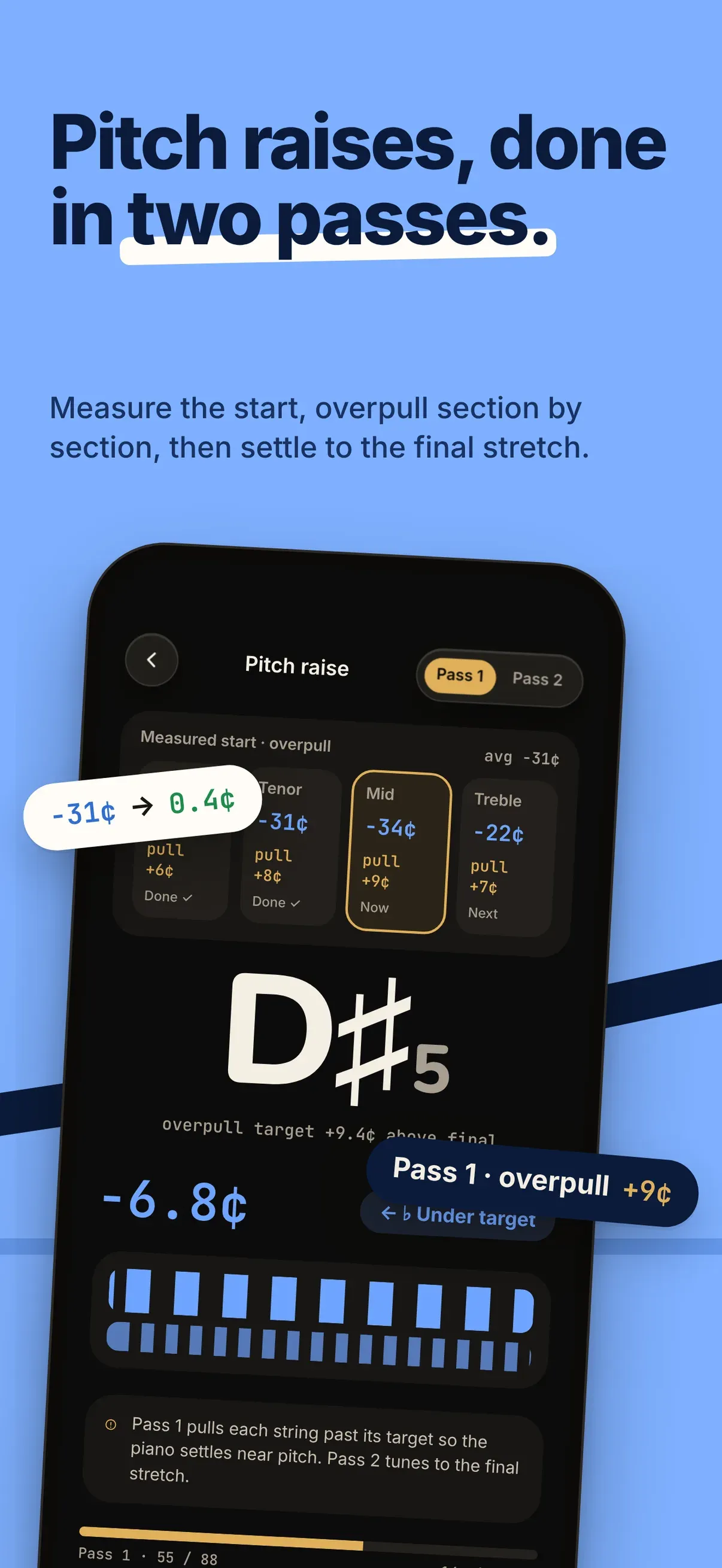
- Pitch raises in two passes, with a capped overpull section by section
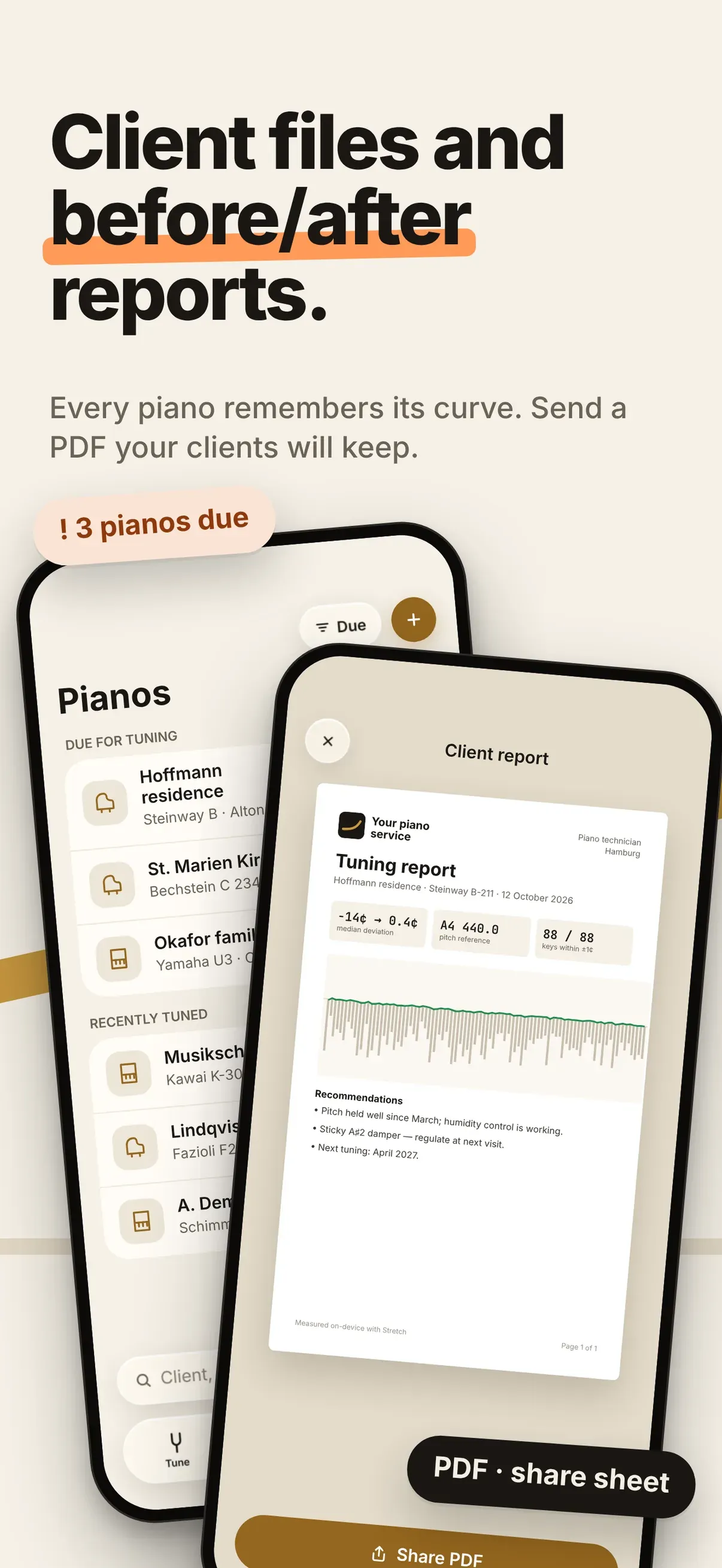
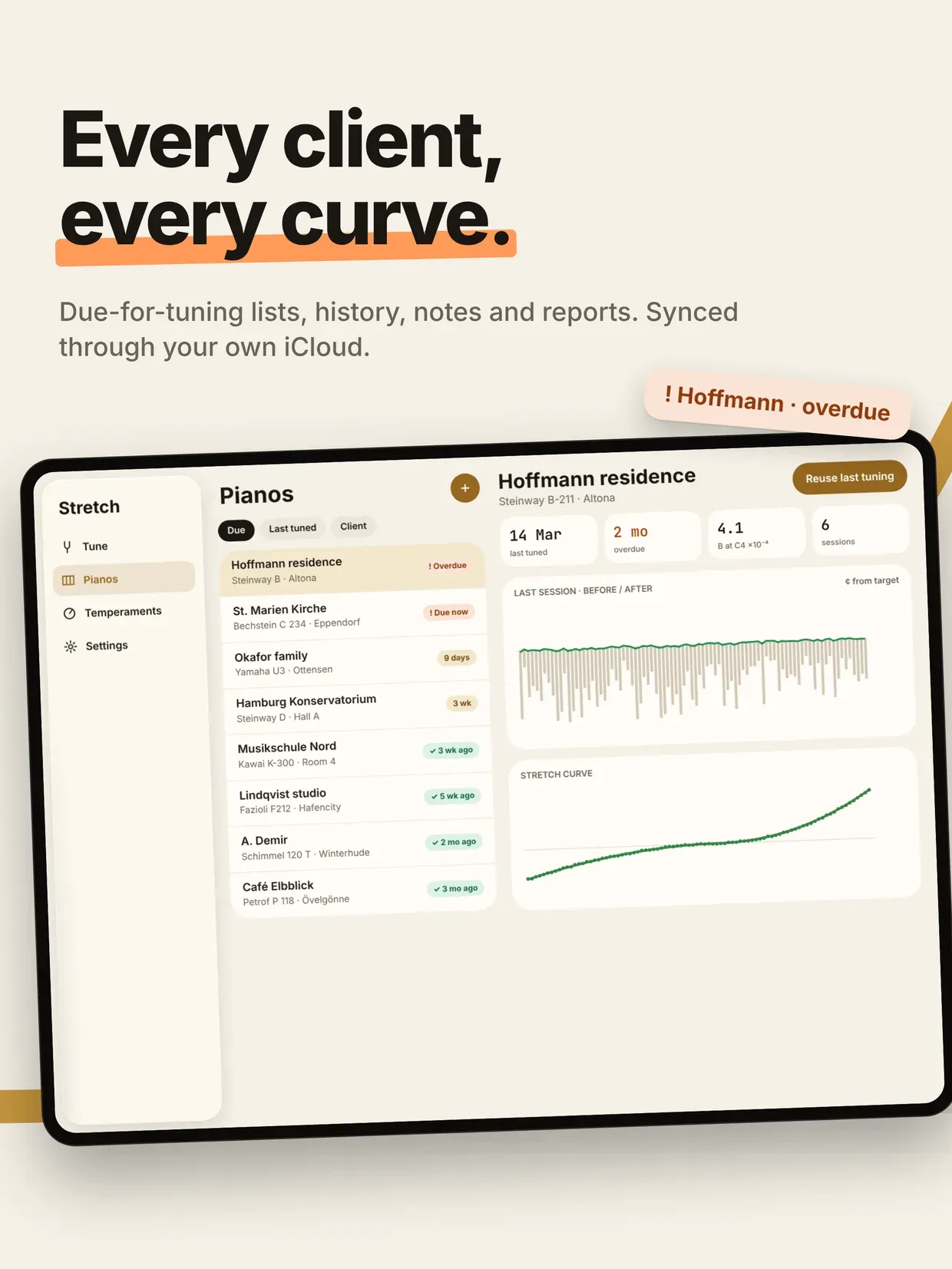
- A file per piano — curve, visit history, notes and tuning interval — synced through your own iCloud
- Before and after charts across the whole keyboard, shared as a PDF report
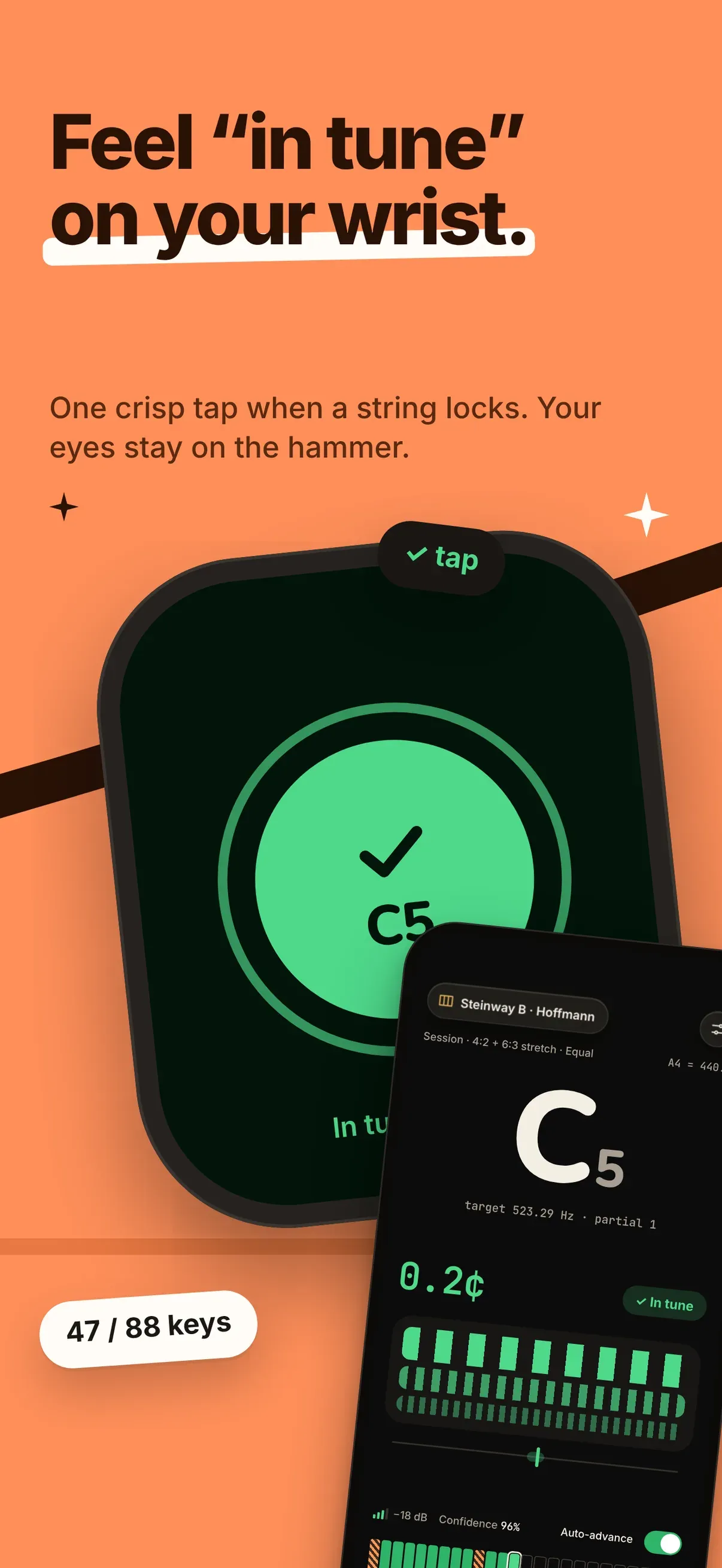
- Apple Watch app with note, cents and a tap when a string is in tune
How it works
-
Measure the piano
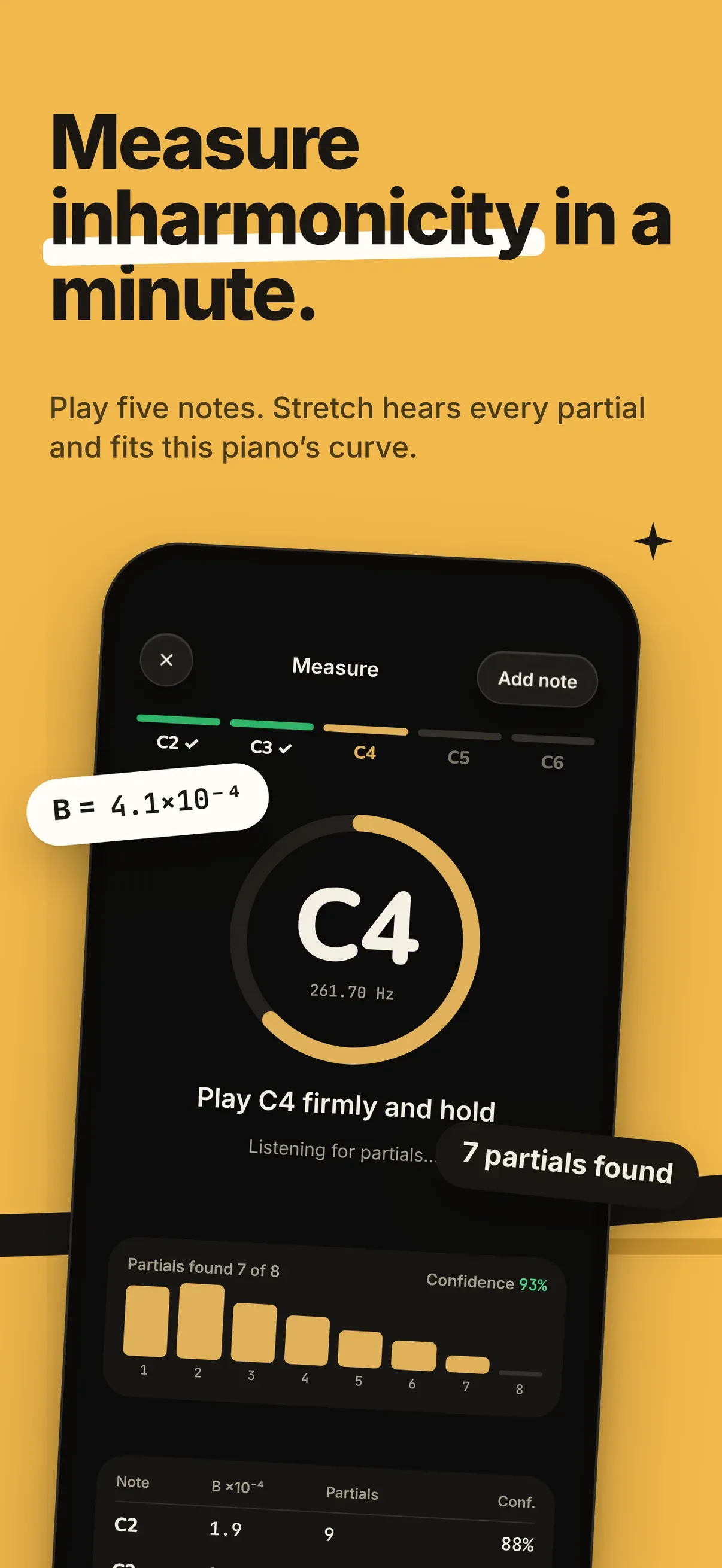
Play C2, C3, C4, C5 and C6 and hold each note, adding C1 or C7 if you like. For every note Stretch finds up to eight partials, fits the inharmonicity coefficient and shows a confidence score. The curve is saved with the piano, so the next visit starts from the same measurement.
-
Shape the tuning
Pick an octave style (Balanced, 2:1, 4:2, 6:3 or Concert) and adjust bass and treble stretch while the curve redraws. Choose equal temperament or a historical one, set A4 anywhere from 392 to 466 Hz, and pick an in-tune window of 0.5, 1 or 2 cents.
-
Tune key by key
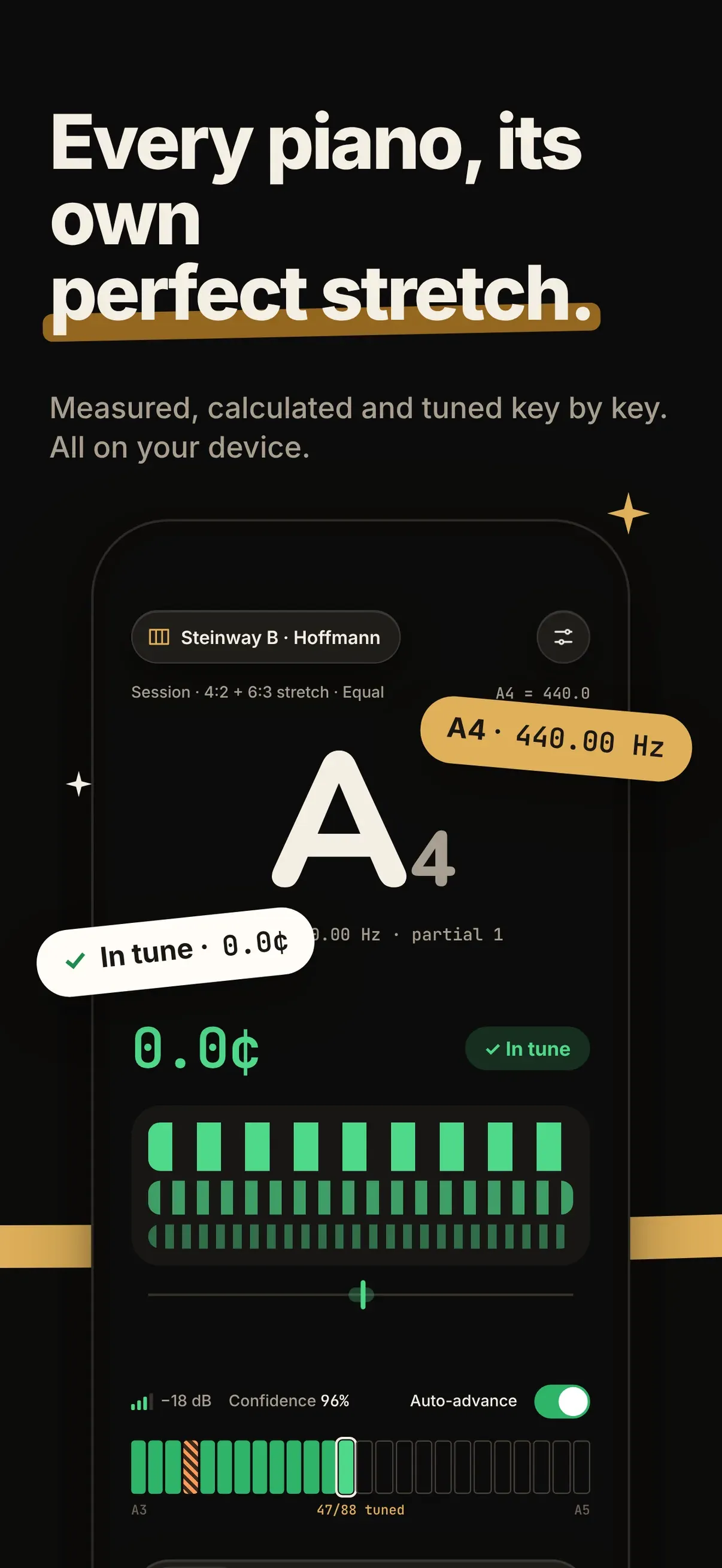
A three-band strobe drifts left when the string is flat, right when it is sharp, and stands still on target, with signed cents, a needle and the partial being read. Play the next key and Stretch follows it, or swipe to step by hand. An 88-key strip shows what is done, what slipped and what is left, and the screen stays awake while you work.
-
Finish the visit
When the session ends you get a before-and-after chart across the keyboard, the time it took and the keys in tune. Save it to the piano file and share a PDF report with the client. Piano files keep the client, location, tuning interval, notes and every past visit.
Who it is for
-
Piano technicians
Measured stretch for each instrument, two-pass pitch raises, a unison beat-rate helper and client files with due dates and PDF reports.
-
Students learning to tune
A strobe that shows which partial it reads and how far it is off, on every key, against a curve you can see and change.
-
Piano owners
Home mode maps how far each note has drifted, walks you through a sour unison and says plainly when the job needs a technician.
-
Early music players
Werckmeister III, Kirnberger III, Vallotti, Young II, quarter-comma meantone and Kellner, plus an editor for your own offsets.
Written guide
Stretch: measuring this piano, not a textbook piano
Stretch measures a piano's own inharmonicity, builds a stretched tuning for all 88 keys from that measurement, and guides the work with a strobe. All on device.
Read the guideQuestions about Stretch: Piano Tuner
- Can you tune a piano with your phone?
- The phone can do the listening. Stretch turns an iPhone or iPad into an electronic tuning device: it hears the string through the microphone, measures the piano and shows how far each note is from its target. The pins are still turned by hand with a tuning lever, so the app guides you and does not replace the work.
- Why not use a guitar tuner on a piano?
- A guitar tuner aims every note at equal temperament with pure octaves. Piano strings are stiff, so their overtones sit sharp, and a piano tuned to pure octaves sounds flat in the treble and sharp in the bass against itself. Stretch calculates a stretched target for all 88 keys, from typical values or from a measurement of your piano.
- What is inharmonicity, and how does Stretch measure it?
- Inharmonicity is how far a string's overtones sit above whole-number multiples of its fundamental, and it differs from one piano to the next. Stretch listens to five notes from C2 to C6, finds up to eight partials per note and fits the coefficient B for each one. It then draws the curve across the keyboard and builds the stretch from it.
- Can I tune my own piano at home?
- Home mode is made for that. Check my piano lets you play around the keyboard and draws a map of how far each note has drifted, in words as well as color. Guided touch-up walks you through muting and matching a sour unison, refuses to raise a string by more than 20 cents, and suggests a technician when the typical deviation is above 25 cents.
- Can I tune to A = 432, 442 or 444 Hz?
- Yes. A4 can be set anywhere from 392 to 466 Hz in half-hertz steps, with presets for 415, 440, 442 and 443 Hz. For a piano well below pitch, the pitch raise surveys A0 to A7, overpulls each section by a capped amount in a first pass and finishes in a second.
- What is free, and what does Stretch Pro add?
- Free covers the strobe tuner and guided touch-up from C3 to C6 in equal temperament, plus Check my piano. Stretch Pro is a one-time purchase with no subscription. It adds measured stretch, all 88 keys, the unison helper, historical temperaments, pitch raise, client files, PDF reports and the Apple Watch app.
- Is audio recorded, and do I need an account?
- No to both. Stretch uses the microphone only while you measure or tune, analyses the sound as it arrives and never records or sends it. There is no account; piano files sync through your own private iCloud database, which you can turn off in Settings, and export as JSON. Stretch runs on iPhone and iPad, its interface is in English, and an Apple Watch shows the note and cents and taps your wrist when a string is in tune.
Get Stretch: Piano Tuner
Strobe tuning for all 88 keys
Free tools
Free tools that fit Stretch
Same corner of the toy box
More apps you might like
If Stretch: Piano Tuner is your kind of thing, these live in the same neighbourhood — all made by the same pair of hands.